Blog
How to Present a CAD Model More Smoothly With a 3D Mouse
Jul
Presenting a CAD model with a 3D mouse is less about impressive movement and more about helping people understand the design. A smooth orbit can make a product, part, or assembly easier to follow, but only if the presenter moves deliberately. Fast spinning, sudden zooms, and wandering views make the audience work harder.
The best presentation workflow is planned. Decide the story, choose the important views, practice transitions, and use the 3D mouse to move between design points with calm control. When movement has a purpose, the audience can focus on the design decision instead of the navigation.
Start with the presentation story
Before opening the model, decide what the audience needs to understand. Are you showing the overall concept, a mechanical change, an assembly issue, a supplier concern, a client-facing design, or a prototype risk? The story determines which views matter.
For example, a client review may need broad shape, scale, use position, and finish direction. An engineering review may need section views, mounting points, clearances, and drawing references. If you do not choose the story first, the presentation can become a tour of random angles.
Prepare anchor views
Anchor views are the safe places you return to during the presentation. They might include front, side, top, isometric, section, exploded, detail, and hero view. Save them in the software if possible. If saved views are not available, practice returning to them manually. The anchor view gives both presenter and audience a shared point of reference.
The 3D mouse is useful between anchors. Use it to make gentle transitions, not to replace structure. Move from the overall view to the detail, pause, explain the point, then move back out. This gives the audience time to connect motion with meaning.
Use slow zoom and short orbits
Presenters often move too fast because they are comfortable with the model. The audience is not. Use slower zoom than you would during solo work. Orbit only far enough to reveal the feature. Avoid rolling the view unless roll is necessary to explain the design.
If the model starts drifting away from the story, reset to an anchor view. A view reset is not embarrassing; it is a sign of good presentation control. The article on CAD viewport navigation mistakes explains why recovery habits matter.
Combine model movement with notes and drawings
A CAD model presentation may need supporting material: drawings, screenshots, specification notes, supplier questions, or prototype photos. Do not force the 3D model to carry every detail. Use the model for spatial understanding and supporting files for exact dimensions, decisions, or approvals.
When drawings are involved, move from the drawing question to the model evidence. A slow 3D mouse transition can help the audience see why a view, section, or note matters. For that workflow, read using a 3D mouse for engineering drawings and model review.
Set up the desk before the meeting
Presentation pressure makes bad desk setups worse. Put the 3D mouse where your hand can rest, keep the regular mouse ready for selections, and make sure keyboard shortcuts or saved views are reachable. If wireless placement helps keep the desk clean, take advantage of it.
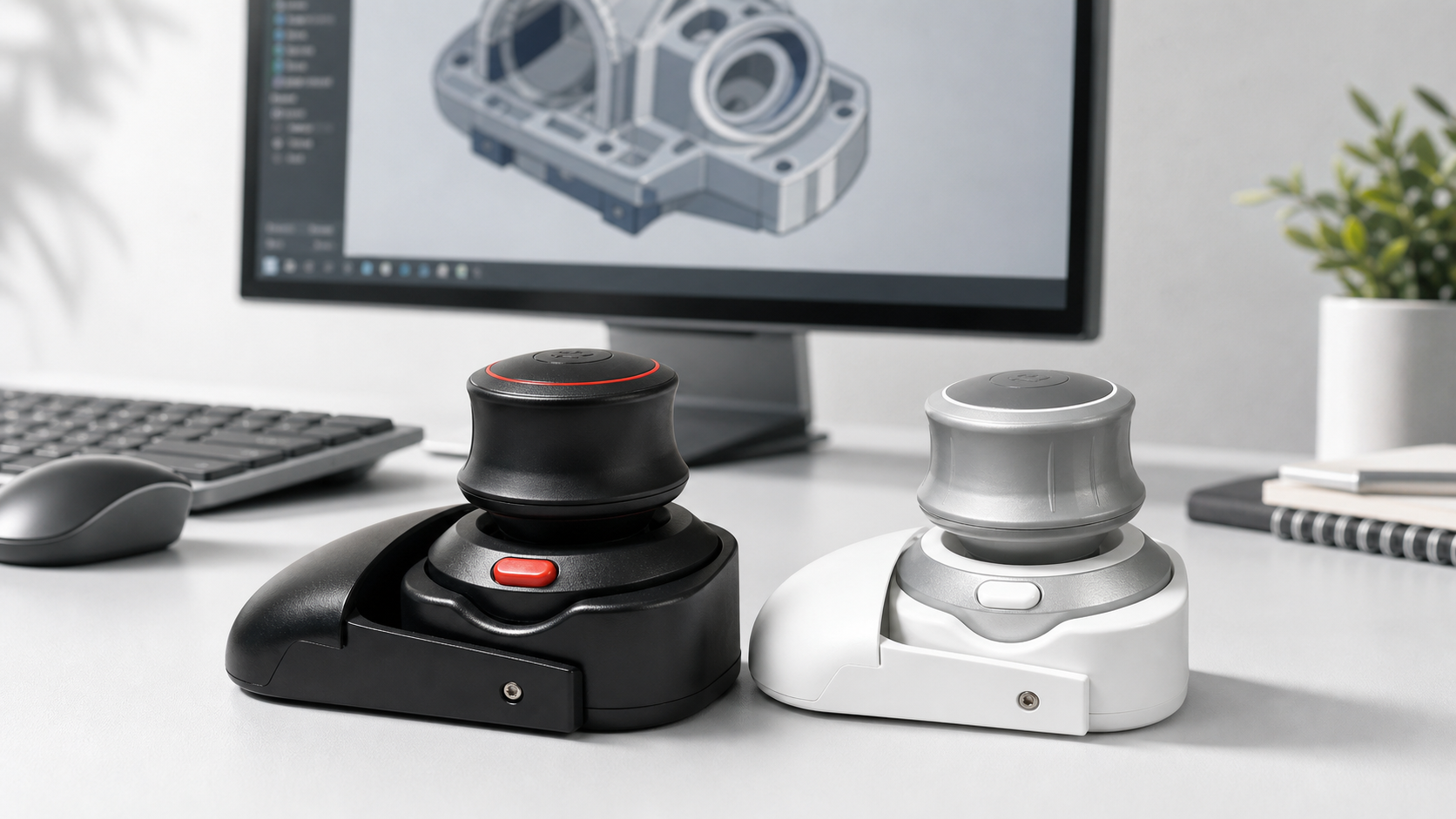
The Wireless 3D CAD Mouse can work well for presentation desks because it can sit in the most comfortable spot without cable clutter. Test the Bluetooth connection and view speed before the meeting, not while people are waiting.
Practice the first minute
The first minute sets the tone. Start with a stable overall view. Introduce the design. Make one small orbit to establish depth. Zoom to the first planned feature. Pause. If that opening feels calm, the rest of the presentation is easier, and questions tend to stay focused.
Practice with the same screen, software, and device settings you will use live. A conference room display, browser-based viewer, or remote desktop session can change navigation feel. If the environment is different, slow down even more and leave room for recovery.
FAQ
Should I rotate the model constantly during a presentation?
No. Move only when the movement helps explain a point. Pause often so the audience can understand the view.
Are saved views better than manual navigation?
Use both. Saved views provide structure; manual 3D mouse movement creates smooth transitions and answers follow-up questions.
How fast should I move?
Slower than your normal solo CAD speed. The audience needs time to understand what changed on screen.
Can a 3D mouse help remote presentations?
Yes, but test screen sharing first. Lag or compression can make fast movement hard to follow, so slower transitions are safer.
Presentation takeaway
A 3D mouse can make CAD presentations smoother when it is used with planning and restraint. Build a story, prepare anchor views, practice slow transitions, and keep the model movement tied to the decision you want the audience to understand.