
Blog
Will a 3D Mouse Make Me Faster at CAD?
Jul
A 3D mouse can make some CAD users faster, but not automatically. Speed depends on the task, the software, the user, and the learning period. It helps most when you spend a lot of time orbiting, panning, zooming, inspecting, presenting, or reviewing models.
If your bottleneck is command knowledge, poor modeling strategy, slow hardware, or unclear design decisions, a navigation device will not solve the main problem. It can only improve the navigation part of the workflow.
Where speed gains are most likely
The strongest candidates are assembly review, part inspection, supplier model checks, model presentations, and repeated movement around 3D geometry. In those tasks, separating view navigation from selection can reduce interruptions.
If you constantly drag the viewport, lose orientation, or stop modeling to adjust the view, a 3D mouse may help after practice.
Speed gains often appear as fewer small interruptions rather than one dramatic time saving. The work feels smoother because the view is already moving while the selection hand stays ready.
Early learning can feel slower
The first week may feel awkward. Your hands need to learn new roles, sensitivity may need tuning, and old mouse habits may fight the new workflow. That does not mean the device failed.
Use a short test routine like how to test a new 3D mouse in 30 minutes, then continue with real project sessions before judging long-term speed.
Software fit matters
A controller can feel useful in one CAD tool and less useful in another. App support, driver behavior, viewport focus, and model size all affect the result. Test the exact software and files you use daily.
Also separate input speed from graphics performance. If a heavy assembly is slow because the workstation struggles, the 3D mouse cannot remove that bottleneck.
For a fair trial, use the same project before and after tuning. Changing the model, software, and device at once makes the result impossible to read.
Keep notes after each session so the improvement is based on evidence, not memory.
Measure the right thing
Do not measure only total project time. Look at smaller tasks: how long to inspect a part, prepare a review, explain an assembly, or compare model changes. Those are the places where navigation gains show up first.
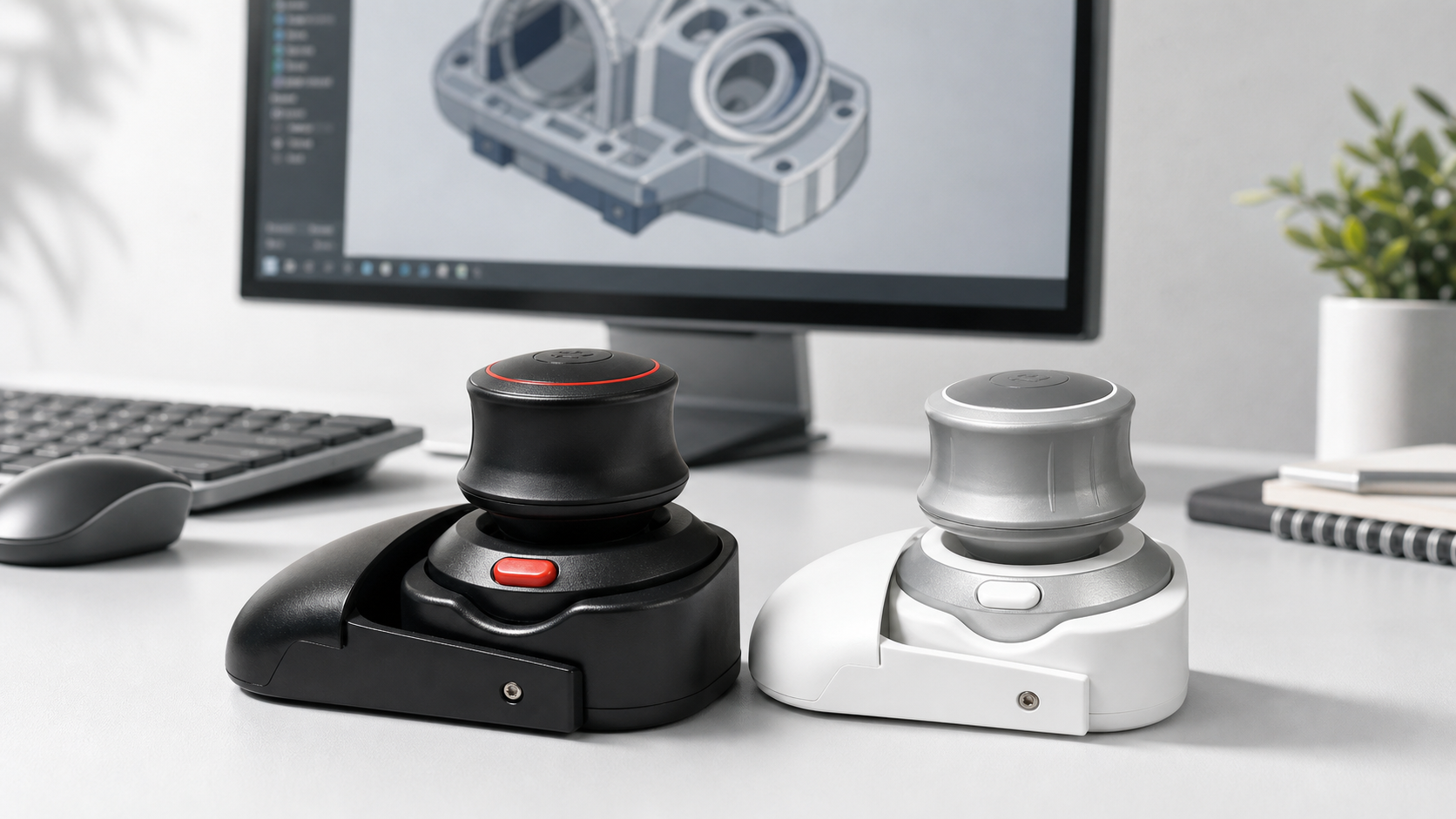
The Wireless 3D CAD Mouse is worth testing if your CAD time includes frequent 3D navigation and you are willing to practice through the early adjustment period.
FAQ
Will a 3D mouse instantly make me faster?
No. It may feel slower at first while you learn the two-hand workflow.
Which tasks benefit most?
Model review, assembly inspection, orbiting, presentations, and repeated 3D navigation.
What if I mostly use shortcuts?
Keep shortcuts. The 3D mouse should complement them, not replace command fluency.
How should I measure improvement?
Compare repeated review and inspection tasks before and after several practice sessions.
Bottom line
A 3D mouse can make CAD work feel faster when navigation is the bottleneck. It will not fix every workflow, and the first week may be slower. Test it against real repeated tasks.