Blog
Using a 3D Mouse With Blender: Beginner Workflow Ideas
Jul
Blender users often ask about a 3D mouse when regular viewport movement starts to interrupt the creative flow. If you are constantly orbiting a model, checking a bevel from several angles, moving through a scene, or setting up camera shots, dedicated 3D navigation can be useful. It is not a magic shortcut for modeling skill, but it can make the camera feel less like a separate task.
The main idea is simple: keep the normal mouse for selecting, sculpting, editing vertices, and using Blender tools, while the other hand controls orbit, pan, zoom, and gentle scene movement. That two-hand rhythm is the same reason CAD users often start with a basic 3D mouse workflow before deciding whether it belongs on their desk.
What a 3D mouse changes in Blender
In Blender terms, the useful motions are not mysterious. Orbit lets you turn around an object or scene. Pan moves the view sideways or vertically. Zoom changes distance. Roll and fly-style movement can help with large environments, walkthroughs, camera blocking, or reviewing proportions from a human-height view.
For mesh modeling, the benefit is usually inspection. You can rotate around a hard-surface part, pause on an edge loop, select with the regular mouse, then continue moving without grabbing the viewport controls again. For scene layout, it helps when you are checking object relationships, scale, composition, and camera staging. For animation and rendering prep, smooth movement makes it easier to see whether a shot works from more than one angle.
Where it helps most
A 3D mouse is most useful when the project has spatial complexity. Product models, interior scenes, kitbash environments, mechanical objects, and layered geometry all benefit from frequent angle changes. If you only make simple flat icons or do occasional edits, the improvement may be modest.
Try it on a real file, not an empty cube. Open a model you already understand, move around the details you usually inspect, and notice whether your right hand spends less time fighting the viewport. That is a better test than judging the device during the first five minutes.
Setup notes before you judge it
Blender behavior can vary by operating system, Blender version, driver support, and device settings. Before buying for serious work, verify pairing, axis direction, sensitivity, and whether the device behaves correctly in your version. If an axis feels inverted or too fast, fix that before deciding the device is not useful.
Keep your keyboard shortcuts. A 3D mouse is not meant to replace G, R, S, tab, view shortcuts, snapping, or modeling commands. It should reduce camera friction while the normal Blender workflow stays familiar.
Where 3D Mouse Kit fits
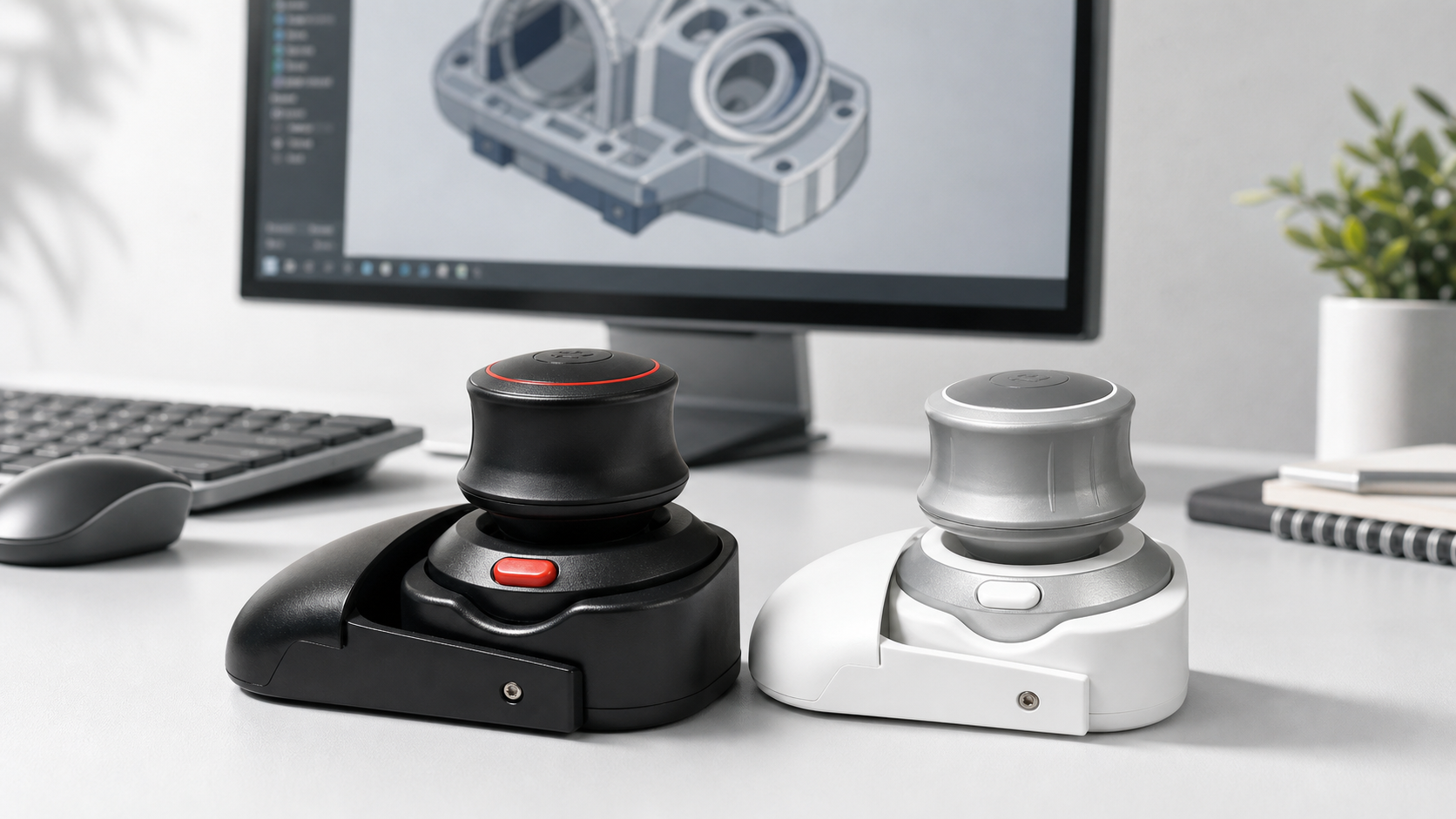
The Wireless 3D CAD Mouse is a compact Bluetooth wireless 3D CAD mouse controller designed for CAD, 3D modeling, Blender workflows, engineering drawings, VR scene navigation, and Google Earth style navigation. At $129, it is positioned as an affordable way to test whether spatial navigation deserves a permanent place in your setup.
If your Blender desk is already crowded, the wireless format matters. You can pair it with a laptop or workstation, keep the normal mouse on your dominant side, and use the controller only when navigating the scene.
FAQ
Can a 3D mouse replace Blender shortcuts?
No. It should sit beside shortcuts. Use it for view movement while the keyboard and regular mouse handle selection and editing.
Is it useful for sculpting?
It can help with viewing and inspection, but sculpting still depends heavily on pen, mouse, brush settings, and tablet habits.
Should beginners buy one immediately?
Beginners should first learn Blender navigation basics. A 3D mouse makes more sense once viewport movement becomes a repeated frustration.
What should I test first?
Test orbit, pan, zoom, sensitivity, and axis direction in your actual Blender version and operating system.
Bottom line
A 3D mouse for Blender is worth considering when navigation is part of the work, not a rare interruption. If you model, review, stage scenes, or present 3D work every week, dedicated navigation can make Blender feel calmer and more continuous.