
Blog
3D Mouse for Revit: Model Review and Walkthrough Use Cases
Jul
Revit users usually look at a 3D mouse for one reason: BIM models are spatial. Walls, floors, systems, furniture, structure, and coordination issues are easier to understand when you can move through the model smoothly. A dedicated navigation controller can help during model review, walkthrough preparation, and coordination meetings.
It is important to separate model navigation from documentation work. Revit sheets, schedules, annotations, tags, dimensions, and family edits still depend on keyboard, mouse, and normal Revit tools. A 3D mouse is mainly about moving through the 3D view with less friction.
Where a 3D mouse helps in Revit
The clearest use case is model review. When checking a lobby, stair, corridor, equipment room, facade, or ceiling zone, smooth orbit and pan make the model easier to read. You can move from a broad view to a problem area, inspect the relationship between elements, and return to the larger context without fighting the viewport.
Coordination is another fit. BIM teams often need to look at clashes, clearances, access space, and discipline overlap. The value is not speed for its own sake; it is the ability to guide the view calmly while people discuss the model.
Navigation versus documentation
A 3D mouse will not make sheet production automatic. It will not replace keyboard shortcuts for view templates, detail work, schedules, or annotations. The best workflow keeps documentation commands in their normal place and uses the controller only when the model needs to be understood spatially.
This is similar to other architecture and CAD workflows where the second controller supports inspection while the primary mouse handles selection. If you are new to the idea, the basic 3D mouse versus regular mouse distinction is useful before buying.
Coordination meeting habits
During meetings, slow movement is better than dramatic movement. Center the area under discussion, pause before speaking, and avoid sudden spins that make viewers lose orientation. Saved 3D views and section boxes can work well with a controller because they create stable review points.
Before using a device in a live meeting, test it privately with your Revit version, operating system, driver setup, and screen share workflow. A smooth private test prevents awkward meeting problems.
Where 3D Mouse Kit fits
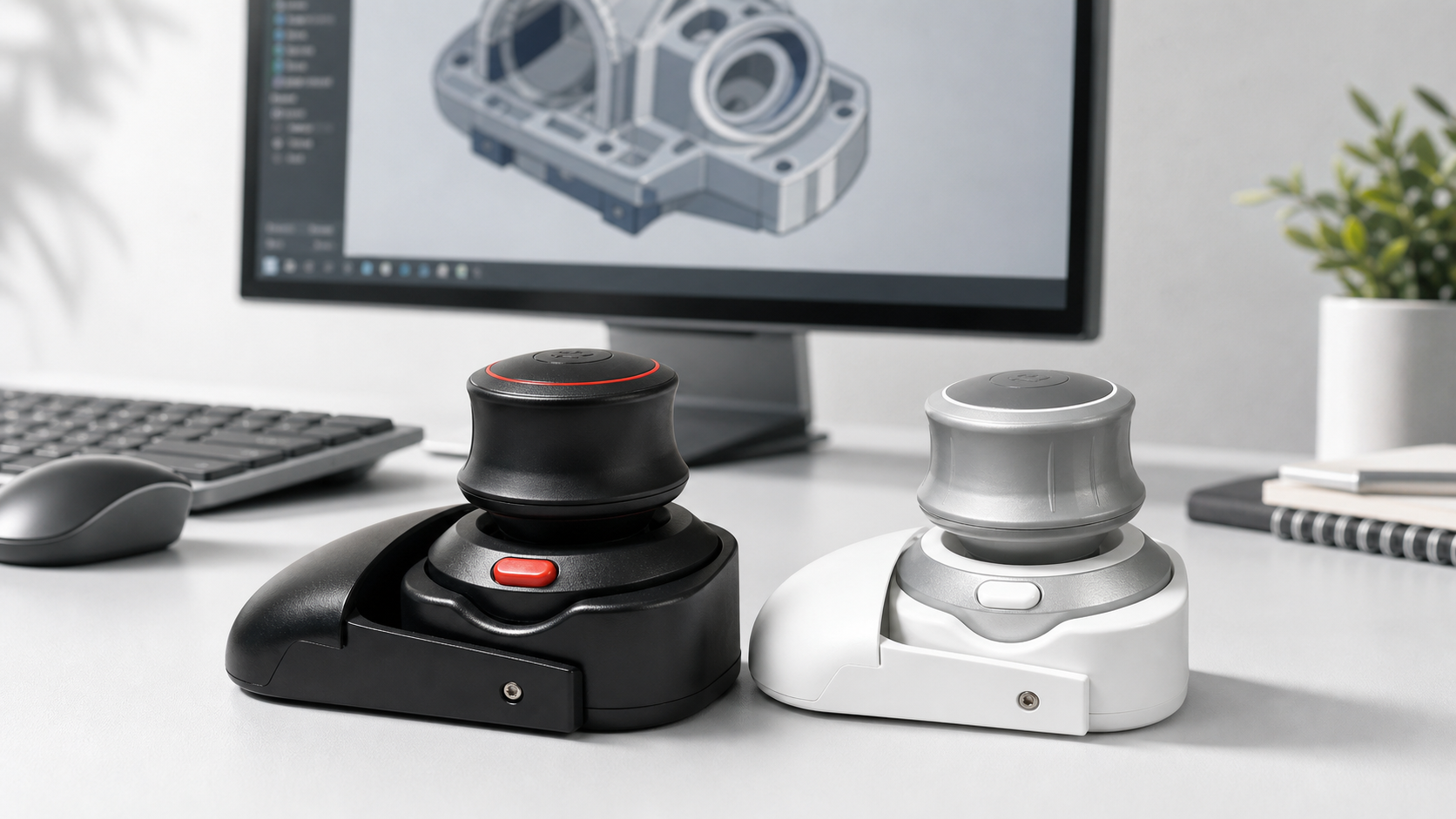
After those compatibility caveats, the Wireless 3D CAD Mouse can make sense as a compact Bluetooth navigation device for BIM model review and architecture workflows. It is a general 3D CAD mouse controller, so treat it as a way to improve spatial movement, not as a Revit-specific documentation tool.
FAQ
Is a 3D mouse useful for Revit documentation?
Only indirectly. It helps with model views, but sheet, schedule, tag, and annotation work still rely on standard Revit tools.
Can it help coordination meetings?
Yes, if movement is calm and the model is prepared with useful views, section boxes, or review areas.
What should I test first?
Test a real project model, your Revit version, operating system, driver behavior, sensitivity, and screen sharing.
Who benefits most?
Architects, BIM coordinators, design reviewers, and students who spend meaningful time in 3D model views.
Bottom line
A 3D mouse for Revit is most useful for model review and walkthrough thinking. It is not a documentation shortcut, but it can make spatial coordination easier to follow.