
Blog
Wireless 3D Mouse Buying Guide for CAD Users
Jul
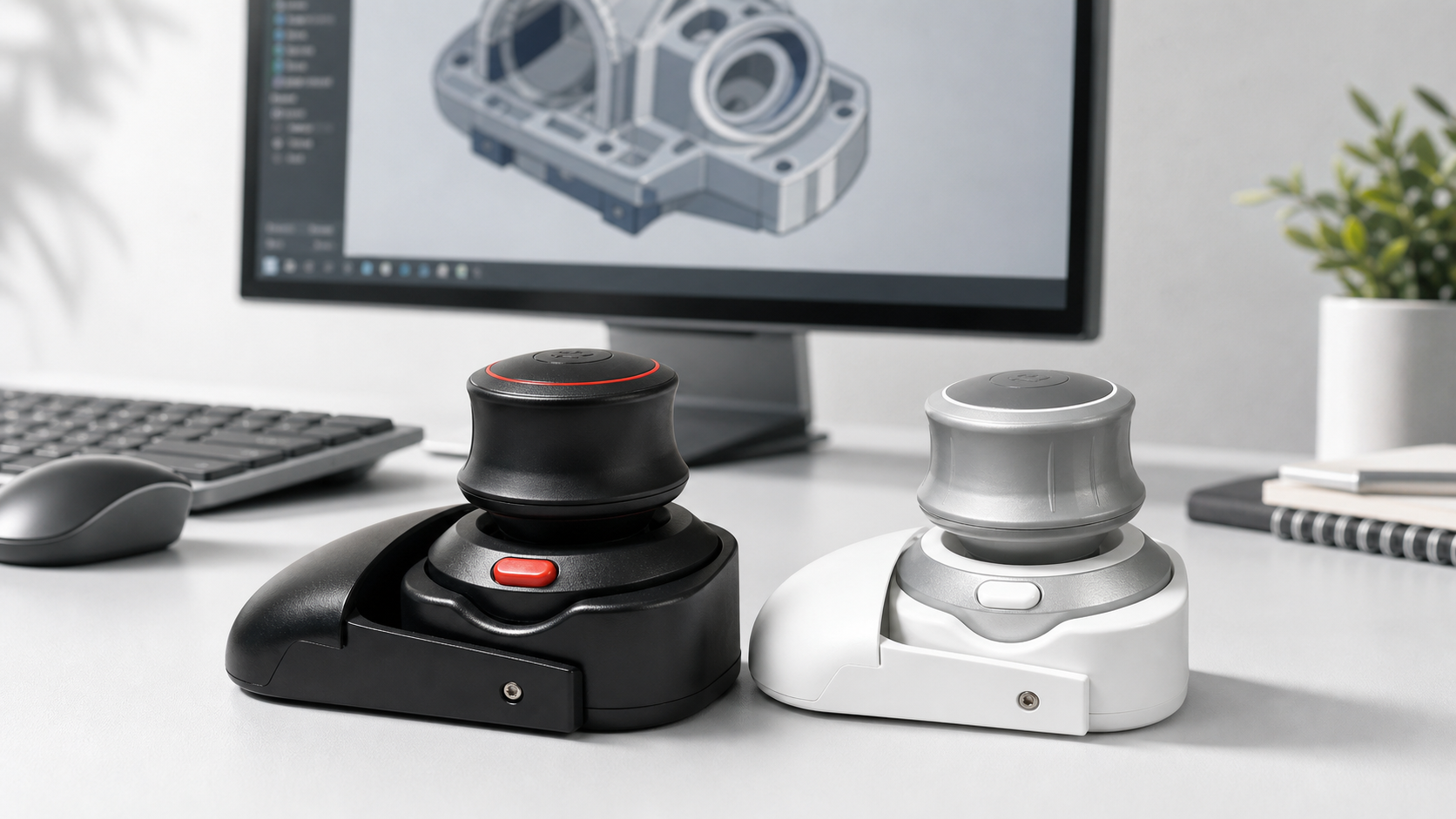
A wireless 3D mouse can make a CAD desk cleaner and more flexible, but it should still be judged like any work tool: connection reliability, software fit, size, price, learning curve, and return policy. Wireless is convenient only when the device behaves reliably in the software you actually use.
CAD users should begin with workflow fit. If you rarely navigate complex 3D models, wireless convenience will not create much value. If you review parts, assemblies, scenes, or models every day, a dedicated controller becomes easier to justify.
Buying criteria that matter
Connection is first. Bluetooth can reduce cable clutter, but you should test pairing, wake behavior, battery routine, and whether the computer remembers the device properly. Software fit is second. A device should work in your CAD, modeling, or scene review tools, not just on a product page.
Size matters because a 3D mouse usually sits beside a normal mouse and keyboard. Price matters because beginners may not need a premium ecosystem right away. Learning curve matters because two-handed navigation takes practice.
Wireless convenience versus wired reliability
Wireless matters most for laptop CAD users, small desks, shared workspaces, and people who move between computers. It can also make the desk feel less crowded. Wired reliability may still matter for users who dislike charging, pairing, or any risk of input interruption.
Neither option is automatically better. The right choice depends on the work environment. A small desk may benefit from the kind of setup described in small workstation 3D mouse planning.
Compatibility and return checklist
Before keeping any wireless 3D mouse, test it for a full work session. Check pairing, navigation axes, sensitivity, sleep behavior, charging, driver needs, and comfort. Use a real model, not an empty file. Confirm the return policy before the test window closes.
After neutral criteria are clear, the Wireless 3D CAD Mouse is worth considering as a compact Bluetooth 3D CAD mouse at $129. It fits users who want core navigation for CAD, 3D modeling, Blender workflows, VR scene navigation, and Google Earth style movement without starting from a larger premium device.
Who should buy one
Frequent CAD reviewers, engineering students, product designers, makers, and architecture users are stronger candidates. Users doing mostly 2D drafting or occasional model checks should wait until navigation becomes a clear bottleneck.
If you travel with a laptop, also consider charging habits and bag space. A wireless device is only convenient when it is ready when the model review starts.
FAQ
Is wireless good enough for CAD?
It can be, if pairing, battery, sensitivity, and software behavior are reliable in your setup.
What should I test first?
Test real project files, not empty scenes. Check axes, speed, wake behavior, comfort, and return policy.
Who should choose wired instead?
Users who prioritize absolute reliability, dislike charging, or work in restricted device environments may prefer wired.
Does wireless replace a normal mouse?
No. A wireless 3D mouse usually works beside a normal mouse and keyboard.
Bottom line
A wireless 3D mouse is worth buying when it solves real navigation friction. Judge connection, software fit, comfort, price, and return policy before treating it as a daily CAD tool.