
Blog
3D Mouse for Game Environment Artists
Jul
Game environment artists work inside spaces before players ever see them. Scene layout, asset placement, camera blocking, scale checks, and level review all depend on moving through 3D space. A 3D mouse can help if it fits the tools and habits already used in the environment art pipeline.
The value is strongest during inspection and presentation. It is weaker if your work is mostly texture painting, asset naming, export cleanup, or 2D reference gathering.
Scene layout and asset inspection
Environment work often means checking how assets read from multiple angles. A doorway, prop cluster, street corner, terrain path, or room layout may look correct from one view but feel wrong when approached from another.
A 3D mouse can make those navigation passes smoother. Use it to move from broad scene composition to detail inspection, then back to full context. That continuous movement can reveal scale and spacing issues earlier.
It can also help when reviewing modular kits. Moving around repeated wall pieces, props, trim, and terrain transitions makes it easier to notice seams or scale mismatches before they reach a playable build.
Blender, Unity, and Unreal expectations
Blender, Unity, and Unreal Engine have different navigation conventions and input behavior. Do not assume a controller feels identical across all three. Test each tool with one scene, one asset close-up, and one camera-blocking task.
If you move between tools often, the reset routine in resetting 3D navigation habits when switching software can keep the experience less confusing.
Camera blocking and review
For portfolio clips or team reviews, smooth movement matters. A 3D mouse can help plan a path through an environment, but the artist should still save cameras, bookmarks, or level positions for repeatable review.
Use slow movement when recording. Fast flying can make a scene look less professional and harder to understand. The controller should support composition, not turn the viewport into a ride.
Compatibility caveats
Check operating system behavior, editor focus, software support, and whether the controller affects the exact viewport you use. Some workflows may need driver settings or app-specific tuning. Some may not support the device in the way you expect.
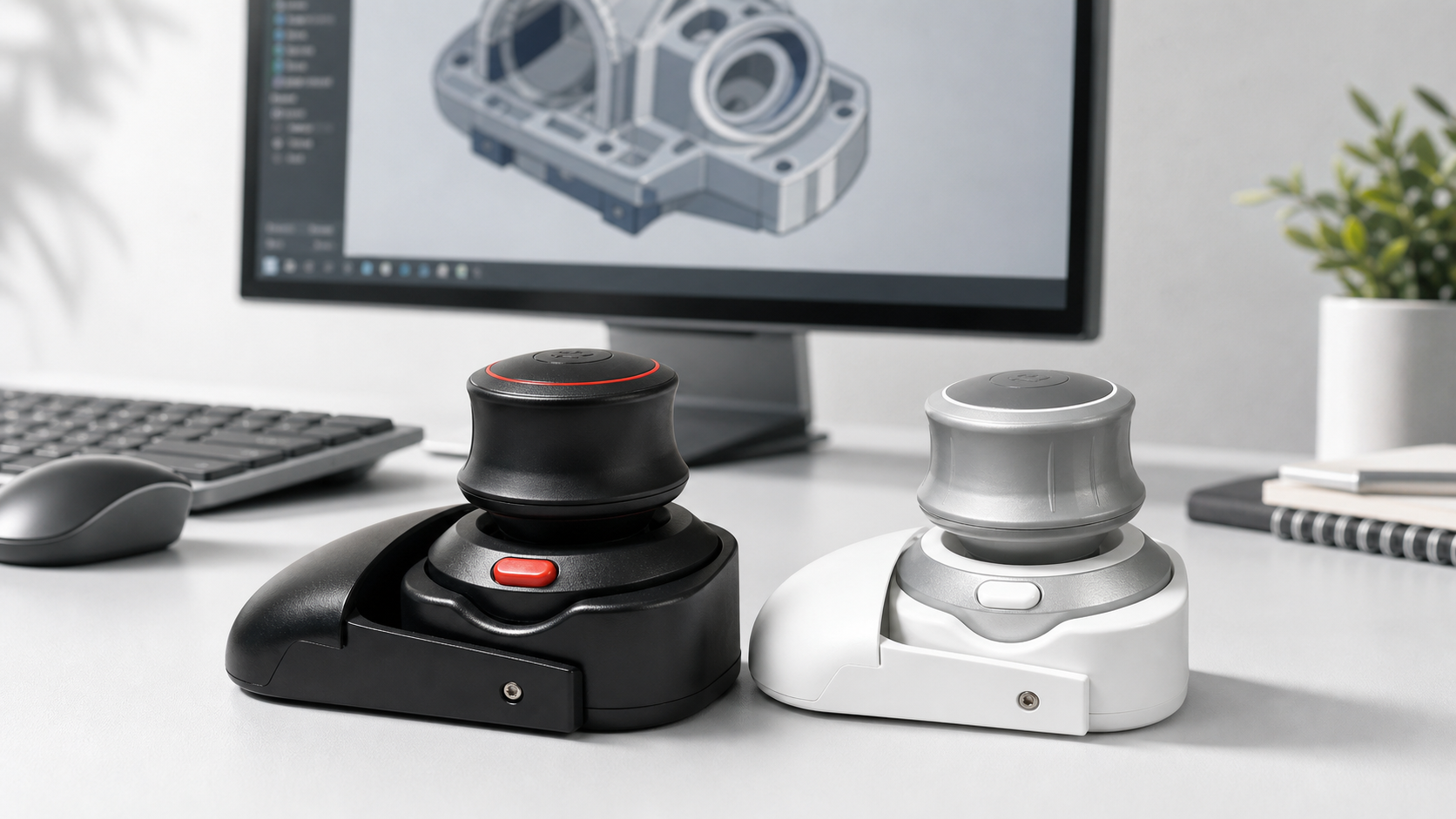
The Wireless 3D CAD Mouse can be tested as a compact navigation controller for environment art review, Blender scenes, and 3D scene movement. Confirm support in your actual game tools before relying on it.
FAQ
Is a 3D mouse useful for game environment artists?
It can be useful for scene navigation, layout review, asset inspection, and walkthrough planning.
Does it replace editor navigation shortcuts?
No. It complements shortcuts and regular mouse controls rather than replacing them.
Which app should I test first?
Test the app where you spend the most time reviewing scenes, such as Blender, Unity, or Unreal.
Is it good for portfolio videos?
It can help if movement is slow, planned, and paired with saved camera views.
Bottom line
A 3D mouse can help game environment artists move through scenes more calmly, but compatibility decides the outcome. Test it in the actual editor and treat it as a review aid, not a replacement for environment art fundamentals.