
Blog
3D Mouse for CAD Managers: How to Evaluate Team Adoption
Jul
CAD managers should evaluate a 3D mouse differently from individual users. One designer may love it, another may ignore it, and a third may need help tuning it. The job is to decide whether adoption improves team work, not whether the accessory looks impressive.
A good adoption process starts with a pilot, clear metrics, and honest feedback. Forcing every designer to use a new device can backfire if the team has different software, desk layouts, shortcut habits, or project types.
Choose pilot metrics before buying broadly
Pick a small set of measurable signals: comfort, actual usage after two weeks, model review clarity, assembly inspection speed, support requests, and whether users would keep the device if they had a choice.
Do not measure only first-day excitement. New hardware often feels interesting at first. The real question is whether it remains useful after normal project pressure returns.
Use before-and-after examples where possible. A pilot note that says a housing review took fewer view resets than usual is more useful than a general comment that the device felt modern.
Match pilots to real workflows
Give the pilot devices to different user types: one heavy assembly reviewer, one designer who presents models, and one user who is skeptical but fair. Have them test real projects instead of demo files.
Include at least one shared review meeting in the pilot. Team value often appears when one presenter can guide the model more clearly for everyone else.
The broader team guidance in 3D mouse for small engineering teams is a useful frame for smaller pilots and shared review stations.
Avoid forced adoption
A 3D mouse should not become another mandatory object on every desk without evidence. Some users may already work faster with keyboard shortcuts and a regular mouse. Others may have desk-space or wrist-position issues.
Offer recommended settings, a short training session, and a clear opt-in path. Adoption improves when users see where the tool helps instead of being told that it should help.
Use a short feedback survey
Ask practical questions: Which software did you test? Which project type? Did it help model review? Did it hurt any task? What sensitivity changes were needed? Would you keep using it? Would you recommend it to a teammate doing the same work?
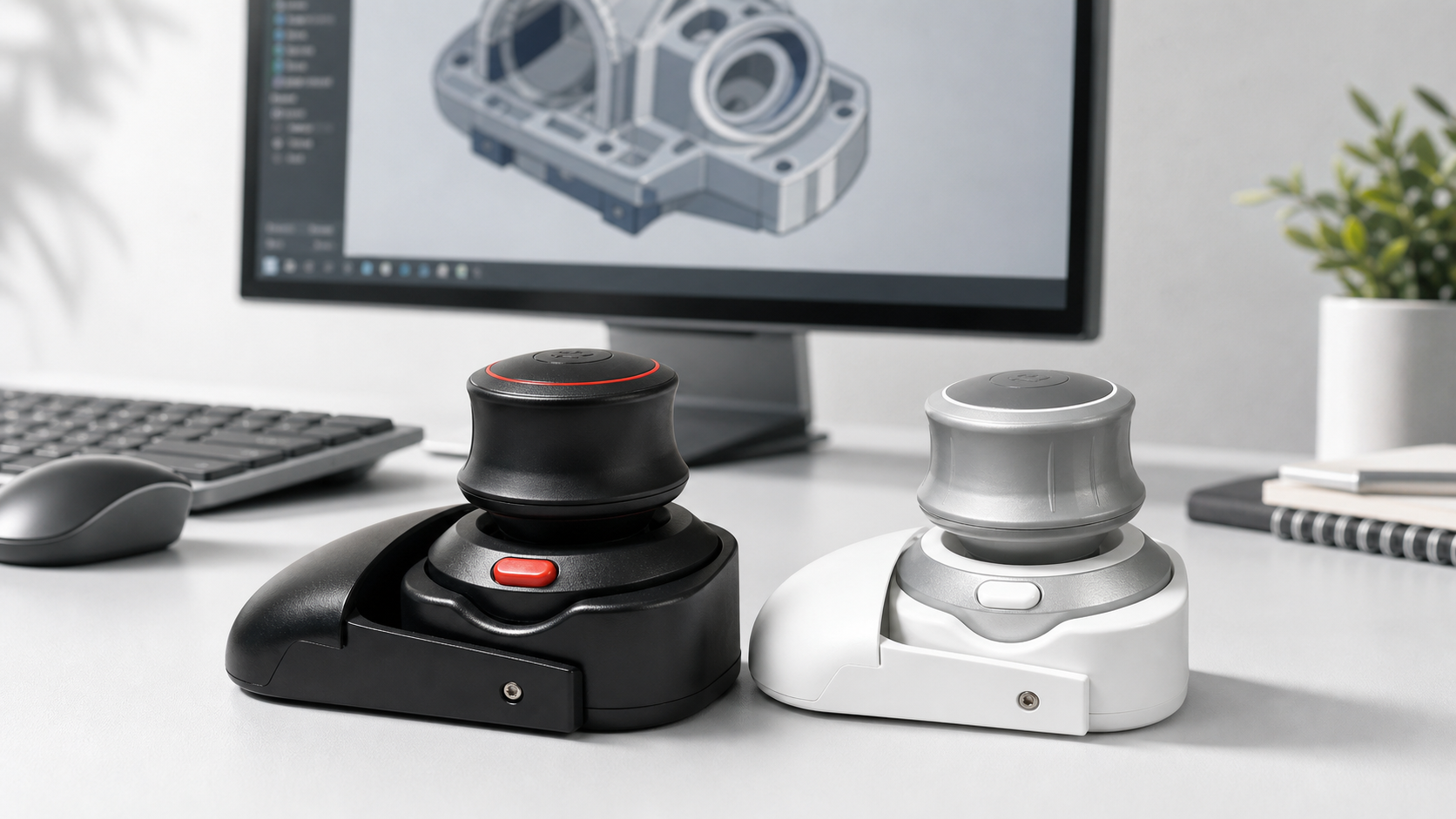
The Wireless 3D CAD Mouse can be evaluated as an entry pilot device for CAD teams that want compact wireless navigation without committing to a broad rollout first.
FAQ
Should CAD managers standardize on a 3D mouse?
Only after a pilot shows real benefit across the workflows that matter.
How long should a pilot run?
Two to four weeks is usually enough to move beyond novelty and collect useful feedback.
What if adoption is mixed?
Keep devices with the users and meeting rooms where they help most instead of forcing full adoption.
What should training cover?
Pairing, sensitivity, hand roles, app focus, troubleshooting, and examples of good use cases.
Bottom line
CAD managers should treat 3D mouse adoption as a workflow experiment. Pilot carefully, measure real use, respect preference, and expand only where the team sees durable value.