
Blog
3D Mouse for SketchUp: Faster Architecture and Interior Views
Jul
SketchUp users often think about a 3D mouse when orbiting around architecture, interiors, furniture, or exterior massing starts to feel repetitive. SketchUp is already known for approachable modeling, but larger models still require a lot of view movement. A dedicated controller can make that movement smoother.
The most important expectation is that a 3D mouse is a navigation device, not a replacement for SketchUp tools. You still draw, push-pull, select, group, tag, measure, and edit with familiar controls. The 3D mouse helps you move through the model while those tools stay available.
Architecture and room review
In architecture and interior models, the value comes from moving around rooms, furniture, openings, ceiling heights, circulation paths, and exterior massing. You can orbit around a room corner, pan across a wall elevation, zoom into a furniture detail, or back out to judge the entire space.
For students and small studios, this can make model review feel more natural. Instead of constantly switching between tool work and view control, you can keep one hand on navigation and the other on selection. That rhythm is helpful during critiques, client previews, and internal design checks.
Walkthrough movement is different from editing
SketchUp editing requires precision. Walkthrough-style movement requires smoothness. Do not confuse the two. When editing geometry, slow the controller down and stop before selecting. When reviewing the feel of a space, use broader movements and keep the camera path readable.
This distinction matters because a fast fly-through can be fun but unproductive. For design review, slower movement usually reveals more: awkward clearances, blocked sight lines, furniture scale problems, or exterior proportions that need revision.
Advice for students and small studios
If you are learning SketchUp, master basic navigation first. A 3D mouse should refine your workflow, not hide weak fundamentals. If you work in a small studio, test on the models you actually use: residential interiors, commercial fit-outs, furniture layouts, or early massing studies.
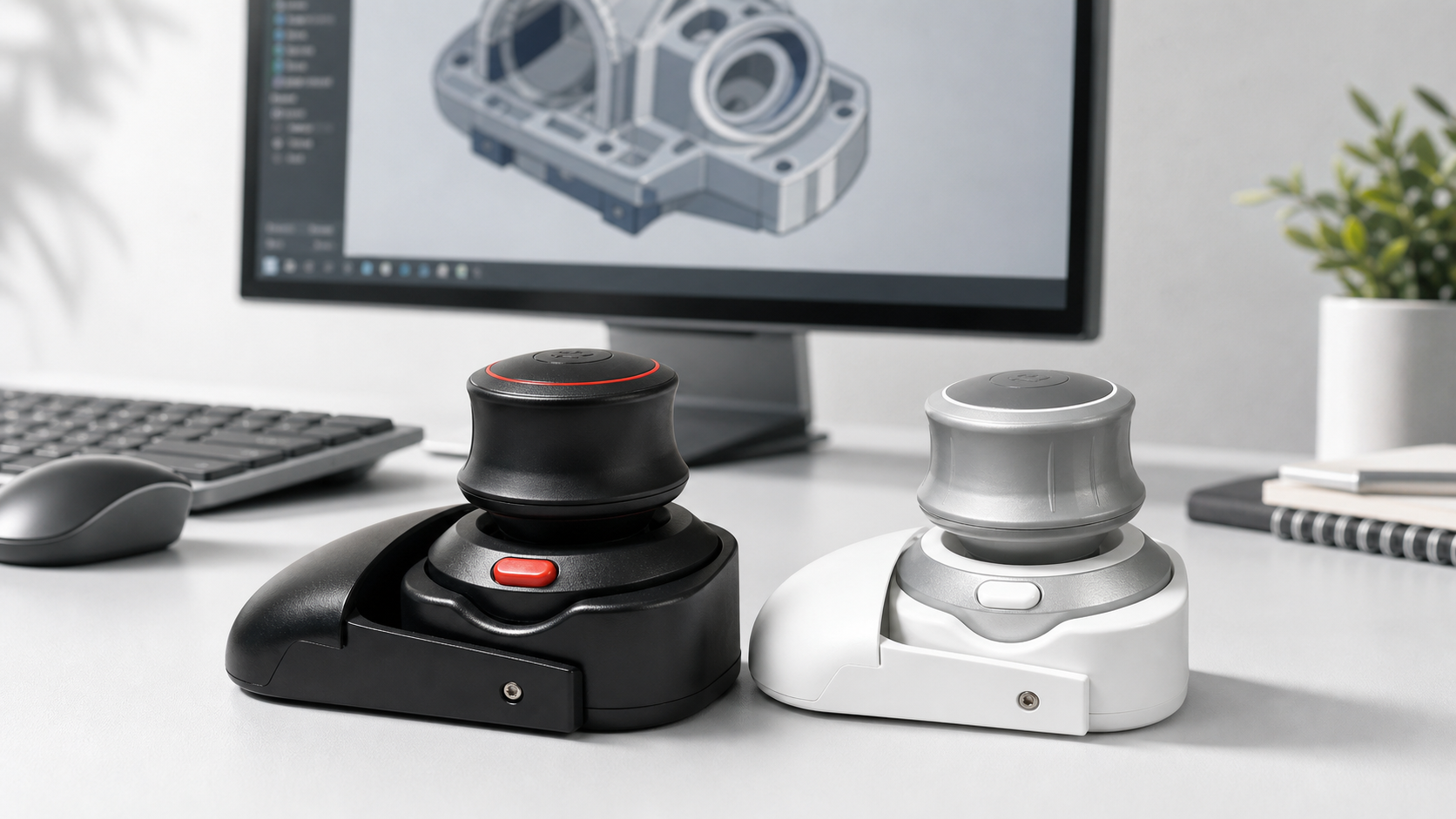
The Wireless 3D CAD Mouse fits a compact modeling desk because it adds Bluetooth 3D navigation without demanding a large setup. It is useful to compare it against your current small workstation layout before deciding where it belongs.
FAQ
Is a 3D mouse useful for SketchUp beginners?
It can be, but beginners should first learn normal SketchUp navigation so the controller supports good habits.
Does it help more with architecture or small objects?
It often helps most with rooms, buildings, furniture layouts, and larger models that require frequent view movement.
Can it replace the regular mouse?
No. The regular mouse remains essential for drawing, selecting, push-pull, groups, tags, and measurements.
What should a studio test before buying?
Test real project files, operating system behavior, sensitivity, axis direction, and whether team members actually like the workflow.
Bottom line
A 3D mouse for SketchUp is most useful when you review spaces often. If orbiting around rooms, furniture, and exterior forms is part of your daily work, smoother navigation can make SketchUp feel more comfortable during everyday modeling, critiques, and early client walkthroughs.