Blog
SolidWorks Assembly Review Tips With a 3D Mouse
Jul
SolidWorks assembly review is one of the clearest places to understand why a 3D mouse can help. Assemblies are not only shapes. They contain relationships, clearances, fasteners, mates, access paths, and design intent. Smooth navigation lets you inspect those details without turning every review into a series of abrupt view changes.
The goal is controlled motion. A 3D mouse should make the assembly easier to understand, not harder to follow. That matters whether you are checking your own work, reviewing a supplier model, or presenting changes to a teammate. The same calm navigation habit also shows up in broader large CAD assembly workflows.
Orbit around the problem, not the whole assembly
Do not start by spinning the entire model. Pick the area that matters: a mate, hinge, clearance gap, bracket, connector, interference zone, or fastener line. Center that area, lower speed if necessary, and orbit around it slowly.
This is especially useful when reviewing mechanical fit. A small gap can disappear from one angle and become obvious from another. Controlled orbiting helps you see whether parts have enough room to move, whether fasteners can be accessed, and whether nearby geometry creates manufacturing or service issues.
Combine navigation with saved and section views
Saved views and section views make a 3D mouse more useful. Use saved views to return to important review positions. Use section views to expose internal relationships. Then use the 3D mouse to move gently around the revealed geometry.
This workflow prevents aimless navigation. Instead of wandering through the model, you create review anchors and use smooth movement to inspect each area. It also helps during meetings because you can return to a known view if the conversation jumps around.
Keep motion comfortable for viewers
Fast rotation can make viewers uncomfortable, especially in large assemblies. If another person is watching your screen, slow down. Pause before explaining a detail. Avoid sudden zooms and rolls unless they are needed. The best assembly reviews feel calm enough that someone else can follow the geometry.
The same applies when you record a review video. Smooth movement is more professional than dramatic movement. Your goal is to make the model readable.
A practical device setup
Use the 3D mouse for orbit, pan, zoom, and view positioning. Keep the regular mouse for selecting parts, faces, mates, and menus. Keep keyboard shortcuts for familiar SolidWorks commands. This division avoids overload and makes the setup easier to teach to another teammate.
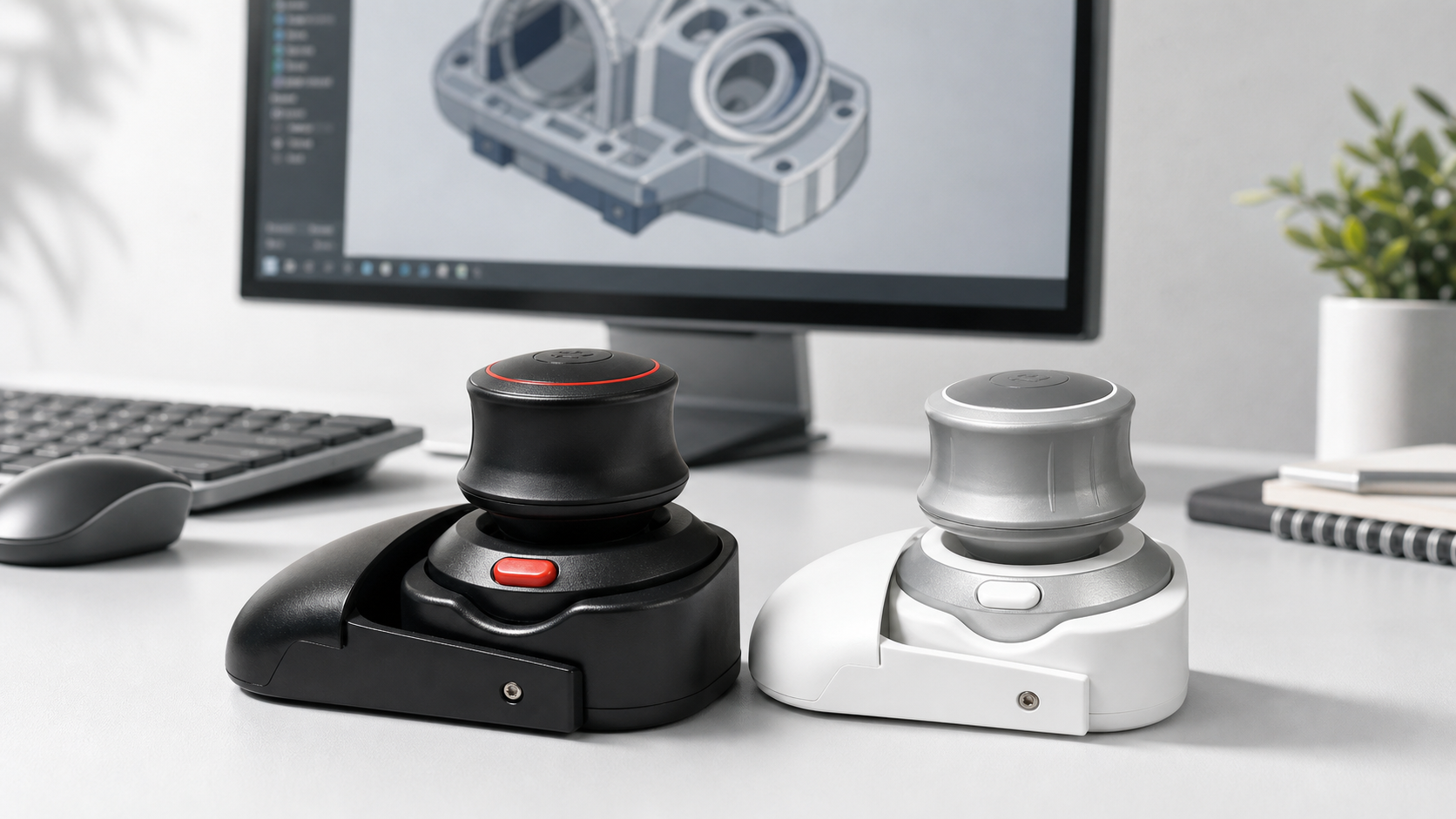
The Wireless 3D CAD Mouse is a compact Bluetooth option for this kind of assembly review workflow. It is a general CAD navigation controller, so verify its behavior in your SolidWorks version and operating system before depending on it for production reviews.
FAQ
What assembly areas should I inspect first?
Start with mates, moving interfaces, clearances, fastener access, interference risks, and tight internal spaces.
Do section views work well with a 3D mouse?
Yes. Section views expose the area, and the 3D mouse helps you inspect it from nearby angles.
How do I avoid making viewers dizzy?
Use lower sensitivity, move slowly during presentations, and pause before explaining each detail.
Should I use it for every SolidWorks command?
No. Keep it focused on navigation. Selection and commands usually stay better on mouse and keyboard.
Bottom line
A 3D mouse can make SolidWorks assembly review more readable when you use it with discipline. Center the problem area, move slowly, pair it with saved views, and keep the model easy for other people to follow.