Blog
3D Mouse for Tinkercad and Beginner 3D Design
Jul
Most Tinkercad users do not need a 3D mouse immediately. Tinkercad is designed for beginners, classrooms, simple models, and fast learning. If someone is still learning how to move objects, group shapes, resize parts, and understand the workplane, the regular mouse and built-in navigation tools are usually enough.
That honest answer matters. A 3D mouse can be useful for spatial thinking, but it should not become the first purchase for every beginner. Learn the software first, then add hardware only when the learner has a real reason.
Why beginners can wait
Beginner 3D design is about understanding shape, scale, alignment, grouping, and simple problem solving. Tinkercad keeps the interface approachable so students can focus on those basics. Adding another device too early can make the setup feel more complicated than it needs to be.
A student who only makes simple name tags, keychains, classroom shapes, or basic 3D prints may not benefit enough to justify the cost. A better first investment might be time, practice models, and a clear project goal.
When teachers or advanced learners may benefit
Teachers may find value when demonstrating 3D thinking to a class. Smoothly rotating a model can help students see the difference between front, side, top, and perspective views. Advanced learners who are moving from Tinkercad toward Fusion 360, Blender, SketchUp, or other 3D tools may also use a controller as a bridge into more serious navigation habits.
For a classroom, durability, simplicity, and budget matter. One shared demonstration device may make more sense than a device for every student. The broader 3D mouse for students decision depends on the level of the projects.
Simple navigation exercises
Use a house, robot, car, or small city block model. Ask the learner to rotate around the object, find hidden faces, zoom into one detail, and return to the whole model. This builds spatial awareness even without advanced CAD commands.
Another exercise is view matching. Display a model from one angle, then ask the learner to navigate to the same angle. This teaches orientation, scale, and perspective. Keep movement slow and deliberate.
A light product note
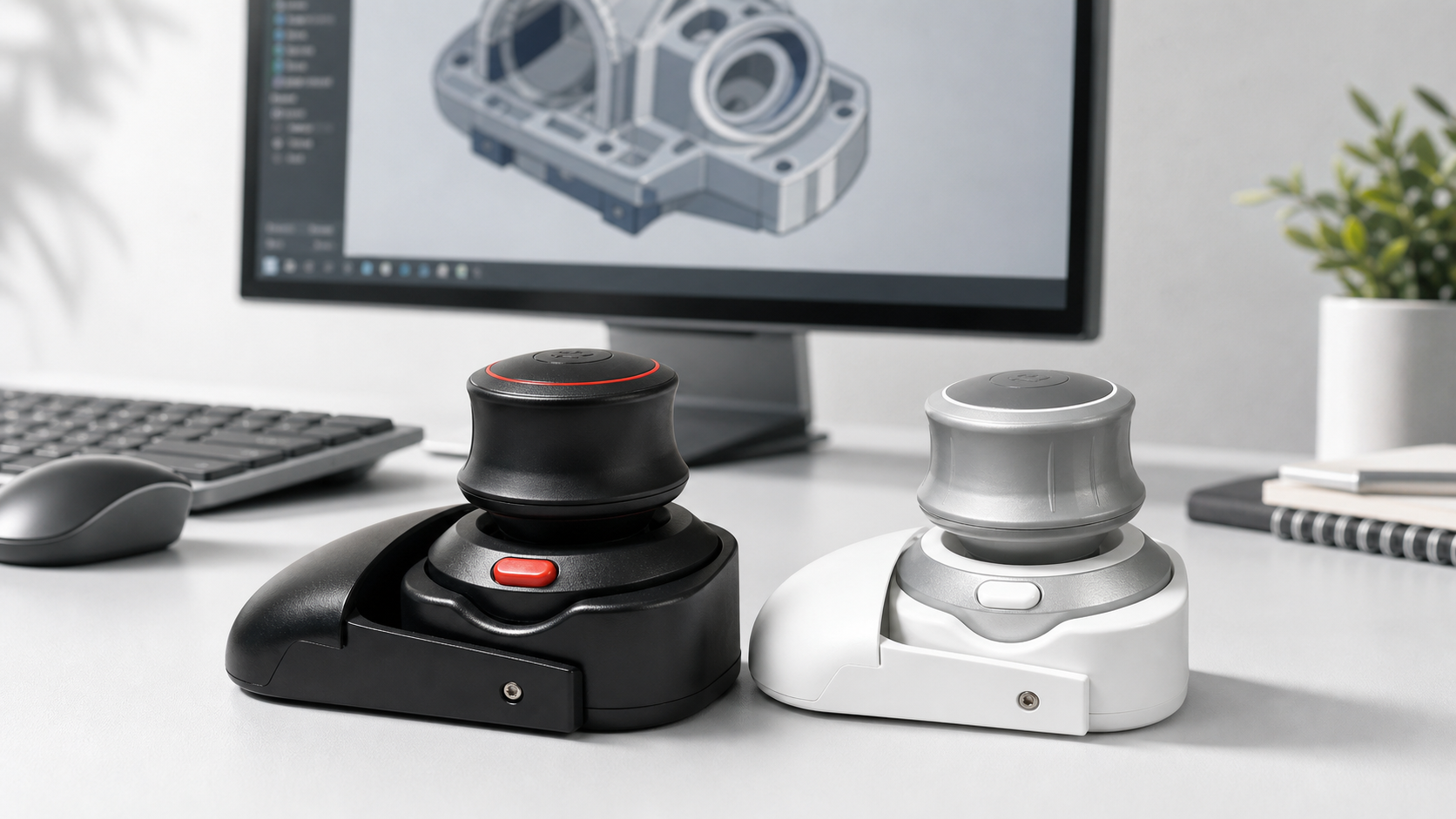
The Wireless 3D CAD Mouse is better suited for users who are already exploring CAD, 3D modeling, Blender workflows, engineering drawings, VR scene navigation, or Google Earth style movement. For pure Tinkercad beginners, it is optional. For teachers, makers, or learners growing into more advanced tools, it may become more relevant.
FAQ
Should every Tinkercad beginner buy a 3D mouse?
No. Most beginners should first learn the software with normal mouse and keyboard controls.
Can it help in classrooms?
It can help as a demonstration tool for spatial navigation, especially when one teacher drives the model.
What exercises are useful?
Use simple objects, view matching, slow orbiting, zooming into details, and returning to a full model view.
When does it become more relevant?
It becomes more relevant when learners move toward CAD, Blender, SketchUp, or larger 3D design projects.
Bottom line
A 3D mouse for Tinkercad is optional, not essential. It can support spatial thinking, but beginners should master simple navigation and modeling habits first.