Blog
3D Mouse for ZBrush: Sculpting Navigation Pros and Limits
Jul
ZBrush users should think carefully about what a 3D mouse can and cannot do. Digital sculpting is usually driven by a pen tablet, brush control, pressure, stroke rhythm, masking, subdivision levels, and sculpting judgment. A 3D mouse does not replace those skills or devices.
Where it may help is navigation and review. Sculptors often rotate around forms, check silhouettes, inspect anatomy, review hard-surface details, or look at a model from angles that reveal weak shapes. A navigation controller can support that viewing process if it fits the user’s setup.
Tablet workflow versus navigation control
A pen tablet is about making marks. It controls brushes, pressure, texture, and sculpting feel. A 3D mouse is about moving the view. Those jobs are separate. If brush control is your problem, a navigation device will not solve it.
The better question is whether changing the view interrupts your sculpting rhythm. If you constantly pause to rotate around a model, inspect a form, and return to the brush, a second navigation input may be useful. If ZBrush’s normal navigation already feels natural, the benefit may be smaller.
Where orbiting around forms helps
Form review is the strongest use case. Characters, creatures, jewelry, props, and hard-surface sculpts all need inspection from multiple angles. Smooth movement can help you judge silhouette, volume, and proportion. It can also support client or team reviews when you need to present the model slowly.
For small detailed work, keep movement slow. Fast spins can hide the very surface problems you need to see. Pause before sculpting, then return to brush work with the pen.
Limits to keep in mind
Brush control remains separate from viewport navigation. A 3D mouse does not replace pen pressure, hotkeys, custom UI, brush presets, or sculpting practice. It also may require compatibility checks depending on your operating system and ZBrush version.
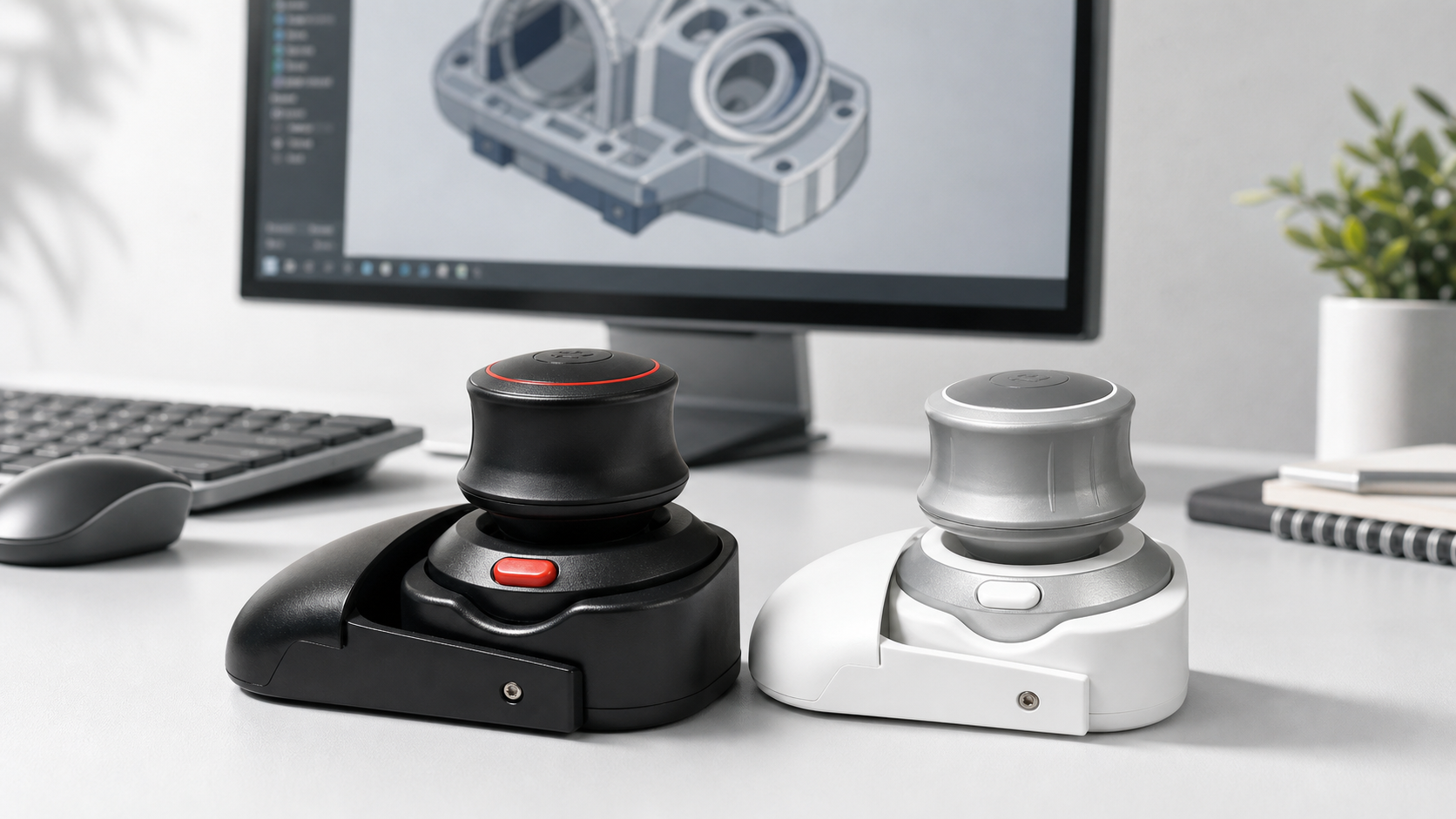
This is why it should be treated as an accessory. The Wireless 3D CAD Mouse can be considered for navigation, but not as a sculpting replacement. It is a general Bluetooth 3D CAD mouse controller for spatial workflows, so test it with your actual ZBrush setup before depending on it.
Workstation fit
A sculpting desk can already be crowded with tablet, keyboard, pen, reference screen, and mouse. Before adding another device, decide where it will sit and which hand will use it. The broader small workstation setup question matters here.
FAQ
Can a 3D mouse replace a drawing tablet?
No. A tablet controls sculpting strokes and pressure. A 3D mouse controls navigation.
When is it useful in ZBrush?
It may help during form review, silhouette checks, presentation, and repeated model inspection.
Will it make sculpting faster?
Only if navigation is a real interruption in your workflow. It will not improve brush skill by itself.
What should I test first?
Test ZBrush version behavior, OS compatibility, desk placement, sensitivity, and whether it works well beside your tablet.
Bottom line
A 3D mouse for ZBrush is a navigation accessory. It can help with viewing forms, but sculpting quality still comes from the artist, tablet, brushes, and practice.