Blog
3D Mouse for Unreal Engine Scene Navigation
Jul
Unreal Engine scene navigation can be demanding because levels are spatial, layered, and often large. Designers, artists, and virtual production teams move through environments to inspect assets, lighting, cameras, scale, and player paths. A 3D mouse may help with that review if the input support fits your setup and the editor viewport is a place where you spend real time.
The important distinction is between game controls and design viewport navigation. Play mode input is about how a player or camera behaves in the game. Editor navigation is about how the creator moves through the scene while building and reviewing it.
Level inspection and asset placement
In level inspection, smooth movement helps you check spaces from several angles. You can move through a room, inspect a doorway, review a prop cluster, look at terrain, or compare lighting in different areas. The controller is not doing design work for you; it is making movement through the editor viewport feel less choppy.
For asset placement, the benefit depends on the task. Precise placement still needs the regular mouse, transform tools, snapping, and numeric controls. The 3D mouse is more useful for moving around the placed assets and checking whether the scene reads well. It is close to the review mindset used in VR scene navigation review.
Camera movement and virtual production
Unreal workflows often involve camera planning, walkthroughs, previs, or virtual production review. Smooth navigation can make these reviews easier, especially when another person is watching. As with CAD presentations, slower movement often communicates better than fast movement.
If you are reviewing shots, keep the navigation separate from final camera animation decisions. Use the controller for exploration and inspection, then use Unreal’s camera and sequencing tools for actual shot construction.
Setup caveats
Input support can vary by Unreal version, plugins, operating system, and device behavior. Before buying, check whether your exact version and workflow support the kind of navigation you expect. Also test sensitivity, axis direction, and whether the device conflicts with other input hardware.
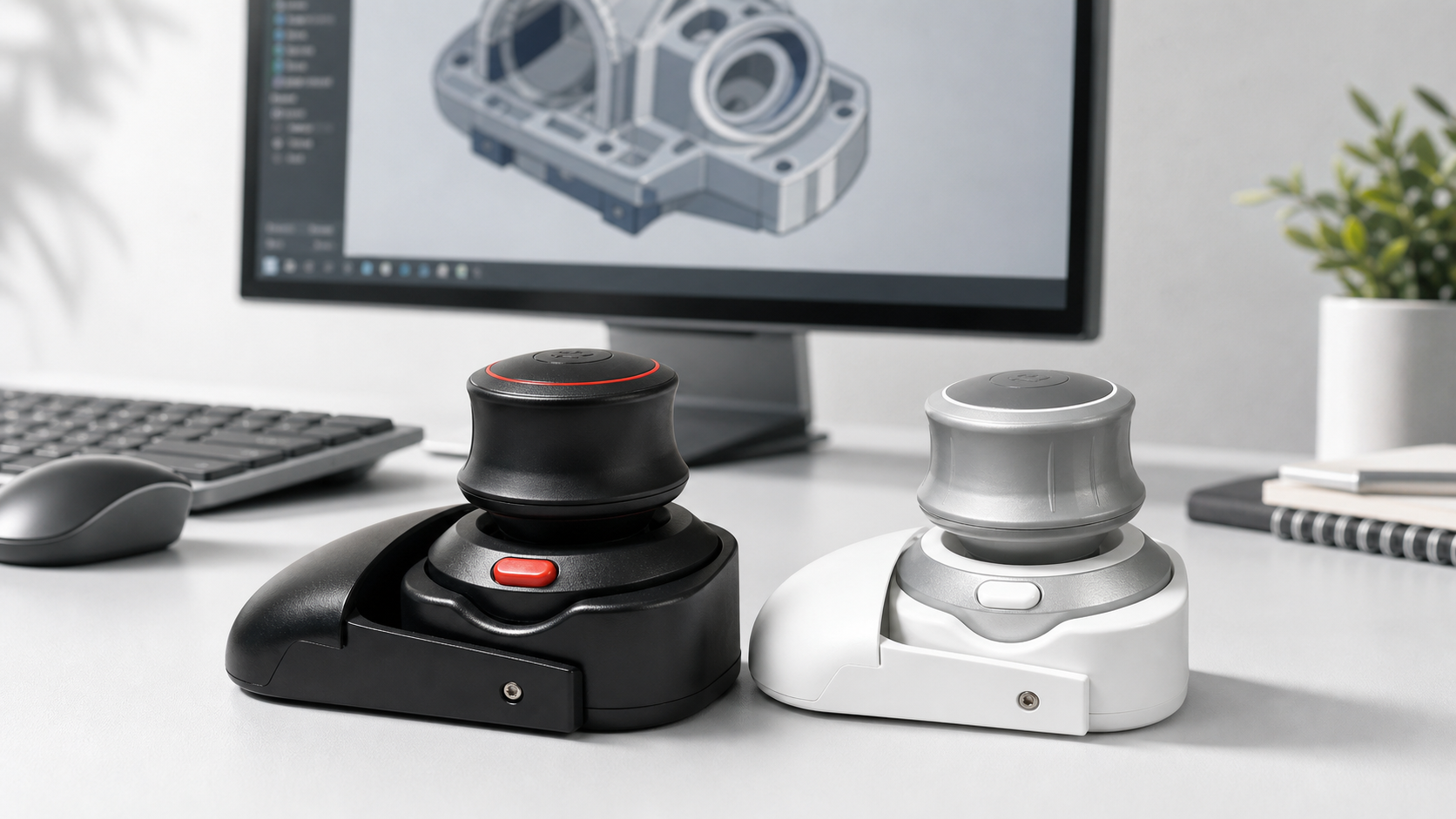
The Wireless 3D CAD Mouse includes VR scene navigation in its product positioning, which makes Unreal-style scene review a relevant use case to test. That is not a promise of automatic integration with every Unreal setup. It is a reason to verify whether compact Bluetooth spatial navigation fits your editor workflow.
FAQ
Is this the same as game controller input?
No. This is about editor viewport navigation, not player controls or final gameplay input.
Can it help level designers?
It can help when inspecting environments, camera paths, prop placement, terrain, and spatial scale.
What should I check before buying?
Check Unreal version support, plugins if needed, OS behavior, sensitivity, axis direction, and input conflicts.
Does it replace transform tools?
No. Transform tools, snapping, coordinates, and the normal mouse remain important for precise placement.
Bottom line
A 3D mouse for Unreal Engine is best viewed as a scene navigation tool. It can help with level review and camera exploration if your editor setup supports it reliably across the projects you actually build.