
Blog
3D Mouse for Unity Scene View Navigation
Jul
Unity Scene view navigation is different from playing a game. In Play mode, input is part of the experience you are building. In the Scene view, navigation is a design task. You move around environments, assets, prefabs, cameras, and lights to understand the project and make changes before anyone tests the runtime experience.
A 3D mouse can help in the Scene view if you spend a lot of time inspecting 3D spaces. It is less useful if your Unity work is mostly 2D UI, scripting, or small flat scenes.
Environment layout and asset inspection
Environment layout is the strongest use case. You may need to move through a room, terrain, level blockout, product demo, training scene, or architectural visualization. Smooth navigation can make it easier to judge scale, spacing, sight lines, and object relationships.
Asset inspection is another fit. When checking a model, prefab, animation setup, or imported object, moving around it calmly can reveal scale problems, orientation mistakes, or material issues. This mirrors broader product design review workflows, even when the final destination is a real-time engine.
Scene view movement versus Play mode
Do not confuse editor navigation with game input. A 3D mouse should help the creator move through the editor, not define how players control the game. Play mode behavior still depends on your input system, scripts, cameras, and gameplay design.
This distinction is important during testing. You may use the controller to inspect a scene, then switch to keyboard, gamepad, VR controller, or touch input for the actual user experience.
Compatibility checks
Before buying, test your Unity version, operating system, device support, sensitivity, axis direction, and whether your editor setup recognizes the controller as expected. If you rely on a company machine, check device policies too.
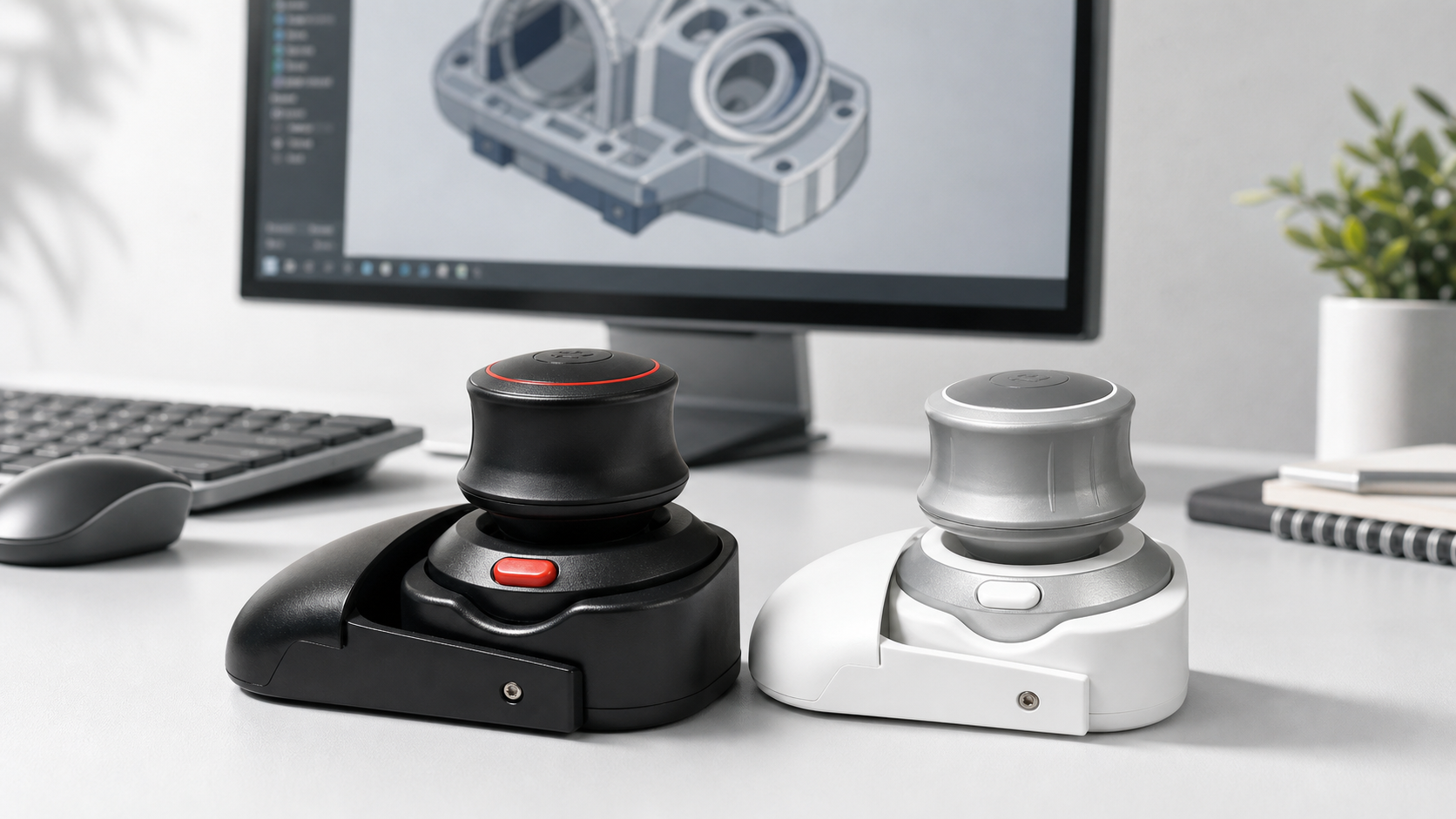
The Wireless 3D CAD Mouse can be used as a general 3D navigation device if your setup supports it. It is a compact Bluetooth controller aimed at CAD, 3D modeling, VR scene navigation, and related spatial workflows, so Unity users should treat it as an editor navigation experiment first.
Who should consider it
3D environment artists, technical artists, game designers, architecture visualization teams, and product demo builders have the strongest case. Developers mostly working in scripts or 2D UI may not need it, unless they also review spatial scenes every day for production decisions.
FAQ
Is a 3D mouse for Unity about player controls?
No. It is mainly about Scene view navigation while building and reviewing the project.
Can it help environment artists?
Yes, especially when checking spaces, assets, scale, lighting, and camera positions.
Should I test before buying?
Yes. Verify Unity version behavior, operating system support, sensitivity, and input conflicts.
Is it useful for 2D Unity projects?
Usually less so. The benefit is strongest in 3D scenes and spatial review workflows.
Bottom line
A 3D mouse for Unity makes sense when the Scene view is a real workspace. Use it for editor navigation, not as a substitute for gameplay input design, controller mapping, camera scripting, or user testing.