Blog
3D Mouse for VR Scene Navigation and Review
Jul
VR scenes should be tested in a headset, but a lot of review happens before that. Designers, artists, architects, and training teams often inspect a scene on the desktop first: assets, scale, sight lines, lighting, collision zones, and presentation paths. A 3D mouse can help with that desktop review stage.
The important boundary is clear. A 3D mouse does not replace VR controllers, hand tracking, headset testing, or actual user comfort checks. It is a navigation tool for looking around a 3D scene before you enter the immersive experience.
Desktop review before headset testing
Desktop review is useful because it is fast. You can inspect a level, find obvious asset problems, review camera paths, check object placement, and discuss changes with a teammate without putting on a headset every time. Smooth navigation can make that review calmer.
This is especially helpful when the scene is still rough. If scale, lighting, and asset placement are changing quickly, a 3D mouse can help you move around the scene while the regular mouse handles selection and editor tools.
Assets, scale, and sight lines
VR scenes depend heavily on scale. A doorway that looks acceptable on a monitor may feel wrong in a headset. Desktop review cannot prove comfort, but it can flag problems early: oversized props, blocked sight lines, awkward distances, or confusing routes.
Move slowly through the scene and pause at important user positions. Check what the user should see, what is hidden, and what objects draw attention. The same scene-review logic applies in Unreal Engine scene navigation and Unity workflows.
What it cannot replace
Do not skip headset testing. VR comfort, controller reach, interaction design, motion sickness risk, and spatial audio cannot be fully judged from desktop navigation. A 3D mouse helps you inspect the scene, but the final experience still depends on real VR testing.
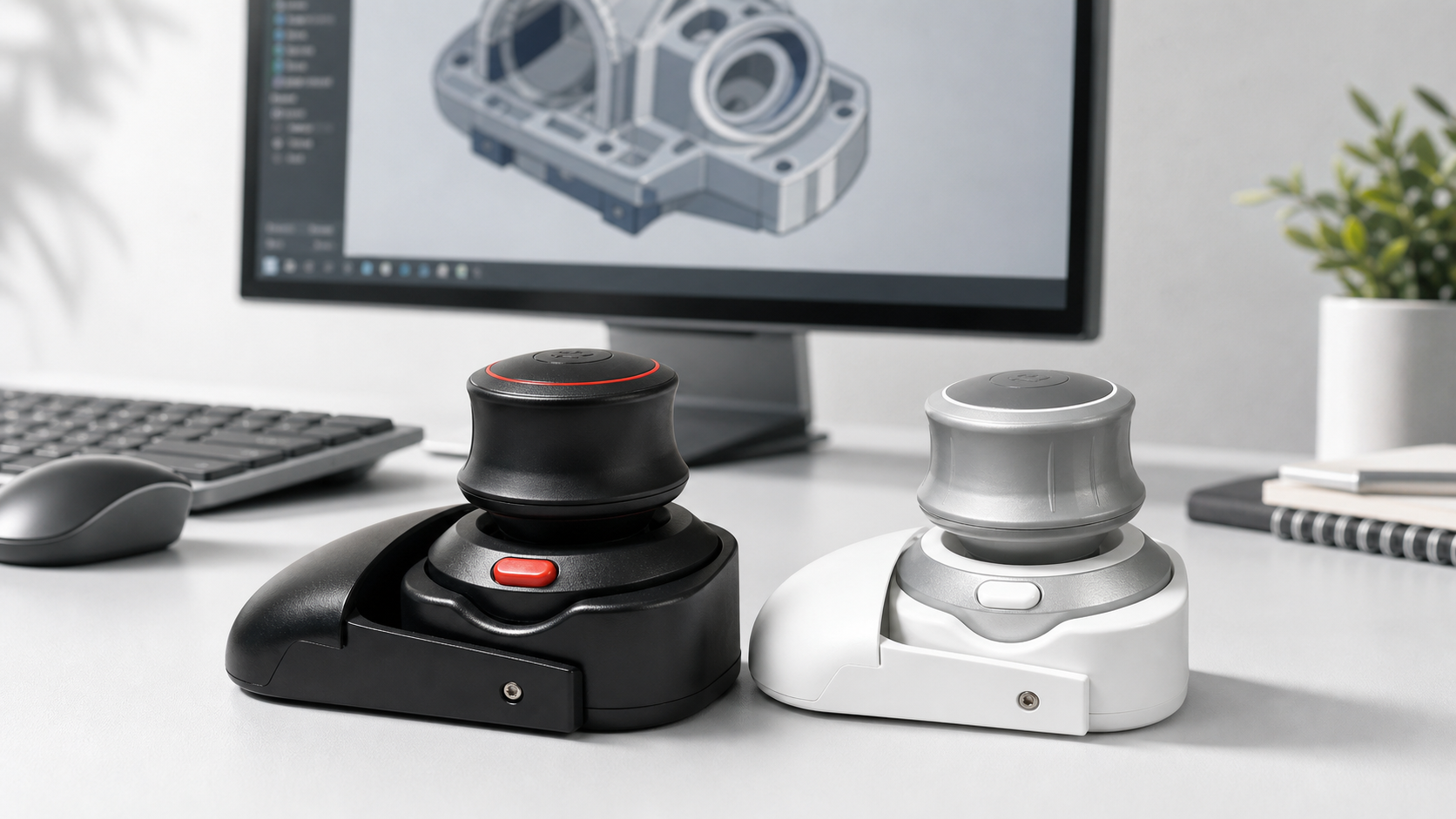
The Wireless 3D CAD Mouse can fit as a desktop navigation tool for VR scene review. It is a compact Bluetooth controller for spatial workflows, so verify behavior in your engine, editor version, and operating system before making it part of the pipeline.
Review workflow
Use a simple pass: first check scene scale, then asset placement, then important sight lines, then movement paths, then presentation framing. Save notes after each pass. Avoid long wandering sessions that produce no decisions.
FAQ
Can a 3D mouse replace VR controllers?
No. VR controllers and headset testing are still needed for interaction and comfort validation.
When is desktop scene review useful?
It is useful before headset testing, during asset placement, and when reviewing rough scenes with teammates.
What should I inspect first?
Check scale, sight lines, asset placement, movement paths, lighting, and obvious spatial confusion.
Does it work in every VR editor?
No. Input support depends on the engine, version, plugins, OS, and device behavior.
Bottom line
A 3D mouse for VR scene navigation is useful for desktop review, not for replacing the immersive test. Use it to find spatial issues earlier, then validate the experience in the headset.