
Blog
3D Mouse for Architecture Model Walkthroughs
Jul
Architecture models are often judged by movement. A plan, render, or still view can communicate part of the design, but a walkthrough helps people understand arrival, scale, room relationships, exterior massing, and how spaces connect. A 3D mouse can make those walkthroughs smoother when the model is being reviewed on a desktop.
The goal is not to move dramatically. The goal is to guide the viewer through the building clearly. Calm navigation usually makes a stronger impression than fast orbiting or sudden zooms.
Exterior massing and interior layout
Exterior massing review benefits from slow orbiting. You can move around the building, check proportions, see how volumes meet, and compare the model to site context. Smooth movement makes it easier to discuss form without constantly resetting the view.
Interior layout review is more about path and scale. Move through entrances, corridors, rooms, and transitions. Pause where a person would make a decision: doorway, lobby, stair, kitchen, workspace, or window. That gives the walkthrough a human rhythm.
Smooth navigation versus click-and-drag orbit
Click-and-drag orbiting works, but it can feel choppy during presentations. The same hand is selecting, orbiting, zooming, and sometimes clicking tools. A 3D mouse separates navigation from selection so the movement can feel more controlled.
This matters when clients or classmates are watching. If the view jumps too much, they focus on the movement instead of the design. A smoother workflow can support the kind of review described in Revit model review use cases and SketchUp walkthroughs.
Preparation tips for presentations
Prepare the model before presenting. Clean unused geometry, set helpful views, decide the path, check lighting, and practice the walkthrough once. Do not improvise the entire route live. A good controller helps most when the presentation already has structure.
For client work, write down the three or four moments the walkthrough must communicate: arrival, main space, key view, and circulation. For studio review, prepare the problem areas instead: massing choice, daylight issue, awkward transition, or unresolved room relationship. The route should support the design conversation.
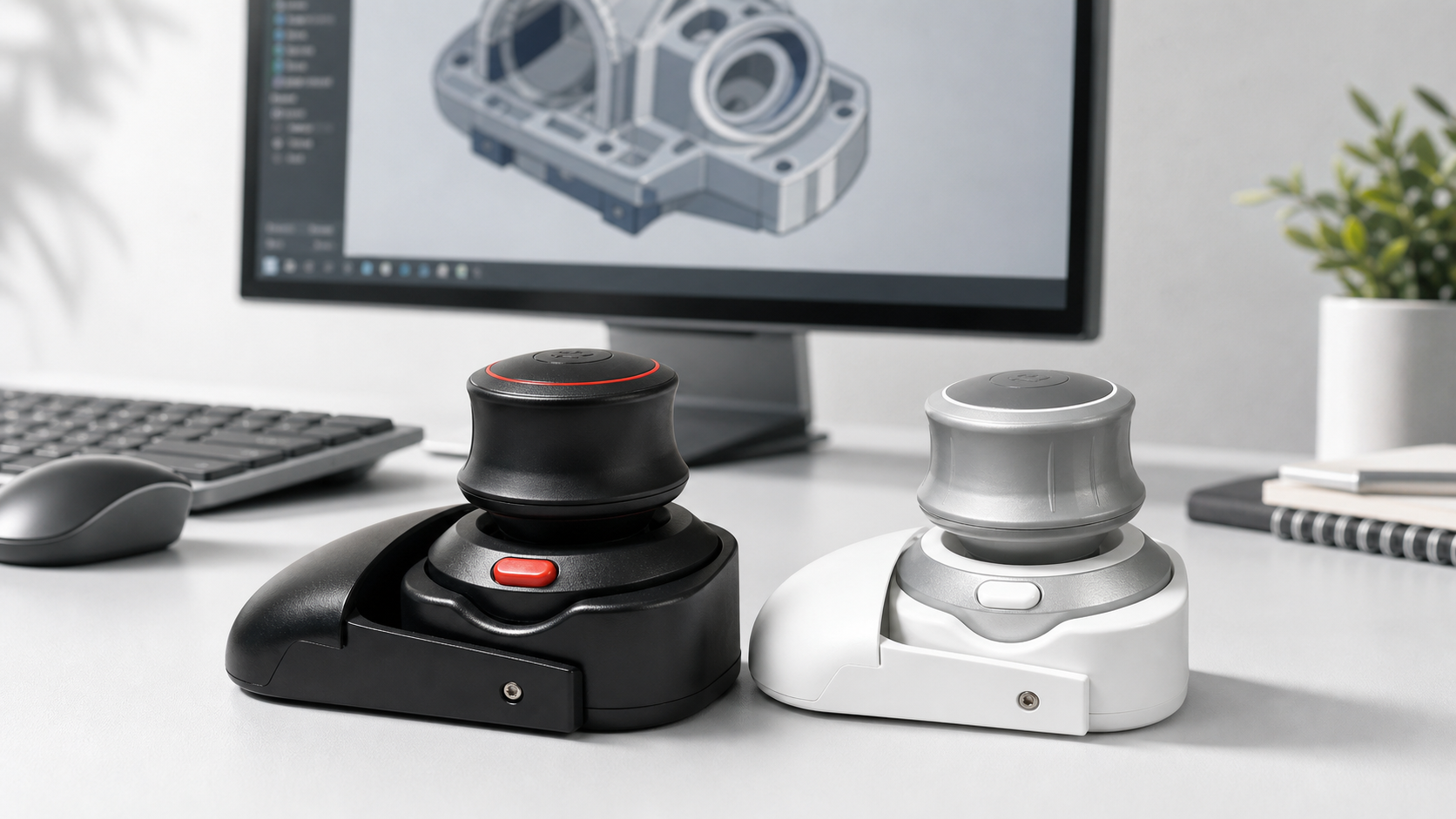
The Wireless 3D CAD Mouse can fit as a compact wireless controller for architecture model walkthroughs. Test it with your software, file size, operating system, and display setup before using it in a client review.
FAQ
Is a 3D mouse useful for architecture students?
It can be useful when students present models often, but basic navigation and clear model organization matter first.
Does it replace rendering?
No. It supports live model movement. Renders, drawings, and diagrams still communicate other design information.
What should I practice before presenting?
Practice the path, view speed, stopping points, room transitions, and recovery views.
Which software workflows benefit?
Revit, SketchUp, Rhino, Blender, and BIM review tools can benefit when desktop navigation is part of presentation.
Bottom line
A 3D mouse for architecture walkthroughs is valuable when it makes the model easier to follow. Use it to guide attention through space, not to perform flashy camera moves that distract from design intent. Clarity beats spectacle in serious reviews.