
Blog
3D Mouse Battery and Charging Habits for Wireless Setups
Jul
A wireless 3D mouse is convenient only when it is ready at the moment you need it. Battery habits are not glamorous, but they prevent the most annoying setup failure: sitting down to review a model and discovering that the controller is low, disconnected, or behaving inconsistently.
The right routine depends on how often you use the device, whether you travel, and how critical it is during client reviews or classroom demos. You do not need a complicated charging system. You need a predictable one.
Charge before important sessions
If a design review matters, charge the device before the meeting rather than hoping it has enough power. Treat it like a presentation clicker or laptop. The cost of checking is small; the cost of troubleshooting during a meeting is much higher.
For daily CAD work, choose a visible charging location. A cable hidden behind the desk is easy to ignore. A short routine after the final work session is usually enough: park the device, connect it if needed, and clear the desk for the next session.
Watch for low-power behavior
Low battery can show up as disconnects, lag, missed input, or inconsistent movement. Those symptoms can look like Bluetooth interference or software trouble, so do not skip the battery check when diagnosing a wireless device.
If motion becomes jumpy, compare a fully charged session against the problem session. Also test with a light model. The guide on 3D mouse lag or jitter explains how to separate input issues from graphics load.
Keep the cable boring and reliable
Use a cable that fits securely and is easy to reach. If a connector feels loose or unreliable, replace the cable before blaming the mouse. A poor charging cable can create a cycle of partial charges and confusing failures.
Do not yank the cable across the desk, bend it sharply at the connector, or leave the device dangling while charging. Small port damage can become a much bigger problem than the original battery issue.
Plan for travel and shared workstations
Designers who move between desks should carry a known-good cable or keep one in the laptop bag. Shared studios and classrooms should label charging spots so the controller returns to the same place after use.
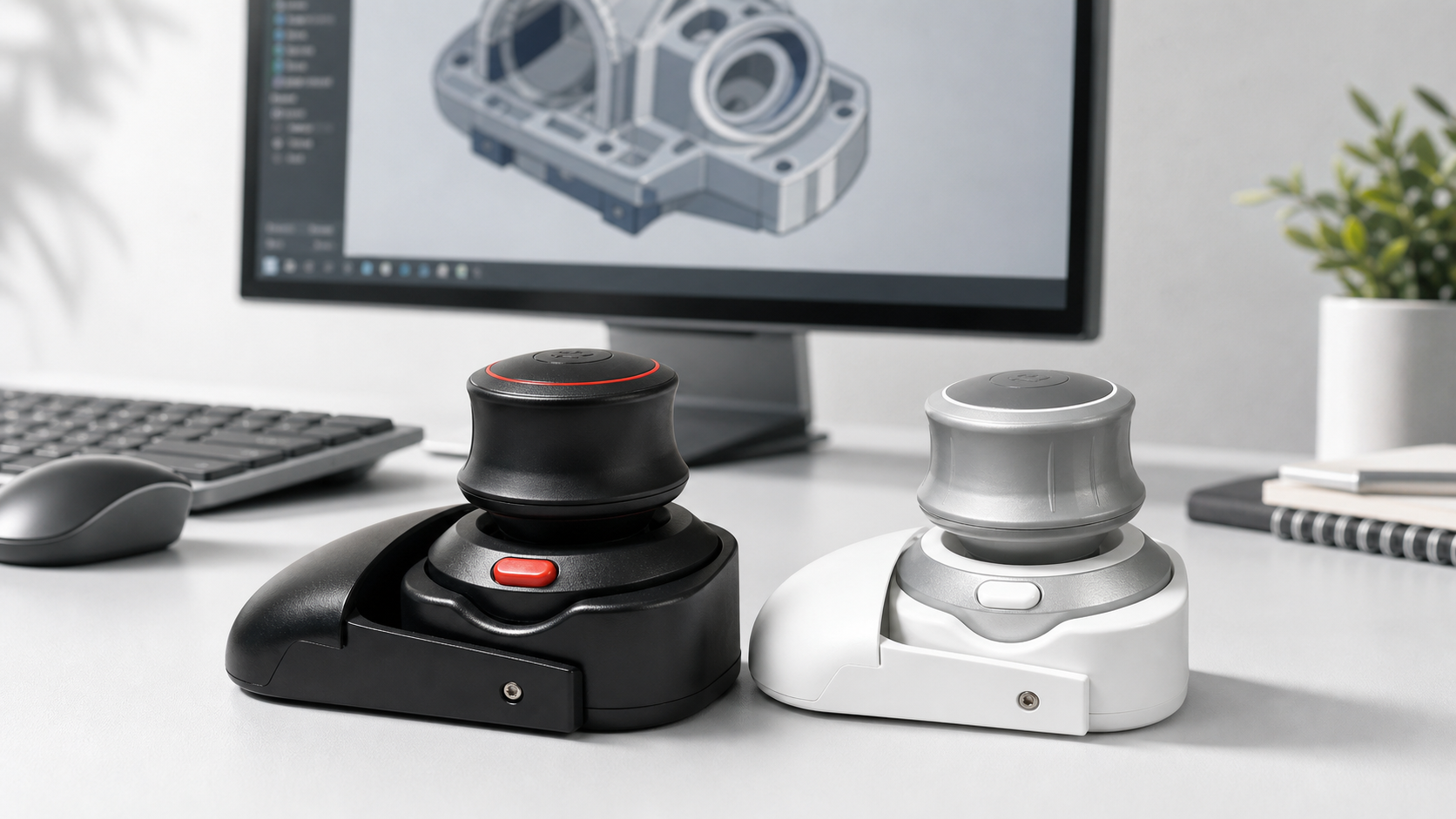
The Wireless 3D CAD Mouse is meant for compact Bluetooth setups, including laptop desks and flexible workspaces. Its wireless convenience is strongest when charging is part of the workflow instead of an emergency fix.
FAQ
Should I leave a wireless 3D mouse plugged in all the time?
Follow the device instructions. In practice, a regular charging routine is better than panic charging before every task.
Can low battery cause lag?
It can contribute to inconsistent input, so battery should be checked before deeper troubleshooting.
Do I need a backup cable?
If you travel or use the device for presentations, yes. A small backup cable prevents avoidable downtime.
What should I check before a client review?
Battery, pairing, app focus, sensitivity, and the specific model you plan to show.
Practical takeaway
Wireless setup works best with boring habits: charge before important sessions, keep a reliable cable nearby, and treat battery state as a first troubleshooting step. That keeps attention on the model instead of the device.