
Blog
3D Mouse Lag or Jitter: Possible Causes and Fixes
Jul
3D mouse lag or jitter can come from several places: Bluetooth interference, low battery, weak adapter quality, heavy models, graphics load, software settings, or system performance. The first step is to decide whether the input device is lagging or the whole viewport is struggling.
Do not assume the hardware is broken immediately. A clean isolation test can separate wireless input problems from model performance problems.
Bluetooth and battery causes
Wireless setups depend on local conditions. Bluetooth interference, distance from the computer, poor adapter placement, low battery, or a crowded USB hub can all affect input behavior. Move the device closer, charge it, remove obvious interference, and test again.
If the lag appears only after sleep or after switching computers, reconnecting or repairing the device may help. For first setup, revisit the Bluetooth 3D mouse pairing guide.
Input lag versus graphics lag
Input lag means the device response itself feels delayed or jittery. Graphics lag means the model, scene, or viewport is too heavy for the computer to display smoothly. These can feel similar, but the fixes are different.
If a small model moves smoothly and a huge assembly lags, the problem may be graphics performance. If every file jitters, including simple ones, look harder at device connection, battery, adapter, or settings.
Simple isolation test
Use one light model in one app. Close heavy background programs. Charge the device. Keep it near the computer. Test orbit, pan, and zoom. Then open the heavier model and compare. This isolates device behavior from workload pressure.
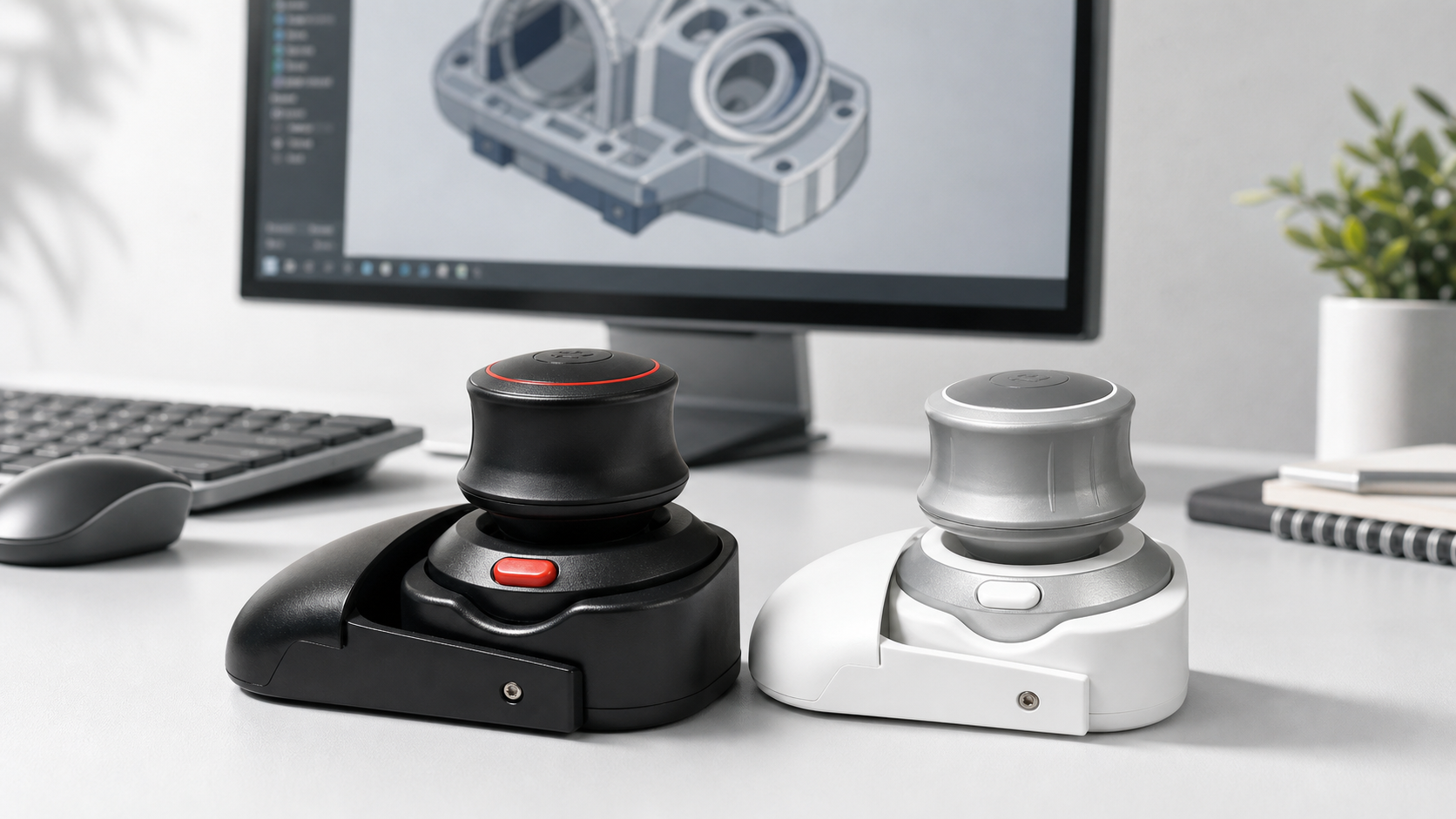
The Wireless 3D CAD Mouse offers wireless convenience, but like any Bluetooth setup, it depends on local Bluetooth conditions. Convenience still needs a stable computer, charged device, and responsive model.
If the problem appears during screen sharing, test locally without the call running. Video calls, browser tabs, recording software, and heavy CAD files can combine to create lag that feels like a device problem. Remove one load at a time until the behavior becomes clear.
For recurring issues, keep a short note of battery level, model size, app, and Bluetooth distance. Patterns often appear after a few sessions.
If lag only happens in one app, check that app’s viewport settings and graphics mode. If it happens everywhere, focus on the device, Bluetooth adapter, battery, or computer load first.
FAQ
Why does my 3D mouse jitter?
Possible causes include low battery, Bluetooth interference, adapter issues, app settings, or heavy model performance.
How do I know if the model is the problem?
Test a simple model. If simple files are smooth and heavy files lag, graphics load may be the issue.
Can wireless interference cause lag?
Yes. Distance, crowded wireless environments, poor adapter placement, and low battery can all contribute.
What should I test first?
Charge the device, move it close, close heavy apps, and test one light model in one app.
Bottom line
3D mouse lag or jitter is easier to solve when you isolate the cause. Separate input behavior from graphics load before replacing hardware or changing every setting.