Blog
How to Reset Your 3D Navigation Habits When Switching Software
Jul
Switching from one 3D application to another can make a familiar 3D mouse feel strange again. CAD, Blender, browser CAD, game engines, and map tools do not always share the same navigation assumptions. Direction, speed, camera center, zoom behavior, and shortcut habits may all change.
That does not mean your setup is wrong. It means your hands learned one software language and now need a short reset routine for another. Treat each app as its own environment instead of forcing every workflow to feel identical.
Name the old habit first
Before changing settings, identify what your hand expects. Do you push forward to move the model away or to move the camera into the scene? Do you orbit around a selected part or around the screen center? Do you rely on fit view after every close inspection?
Once you name the habit, the new software feels less mysterious. You are no longer vaguely uncomfortable; you are comparing specific navigation rules.
Reset one axis at a time
When the view feels backwards, test each axis separately. Move forward and back, left and right, twist, tilt, and zoom. Change only one setting, then repeat the same test. If you change everything at once, you will not know what fixed the problem.
The same approach helps with axis inversion. The guide on 3D mouse axis direction settings explains how to think about natural and reversed navigation models.
Create an app-specific warmup
Use a two-minute warmup whenever you switch tools. Open a simple model, orbit once, zoom to a detail, pan across the screen, return to a full view, and perform one command with the keyboard. This tells your hands which environment they are in.
For teams, this warmup is also useful when several people share one workstation. It makes differences visible before someone starts blaming the device.
Keep notes instead of chasing perfect sameness
Some apps will never feel exactly alike. That is acceptable. Keep a short note for each tool: sensitivity, axis preference, zoom behavior, and any shortcut that remains on the keyboard. The point is repeatability, not universal sameness.
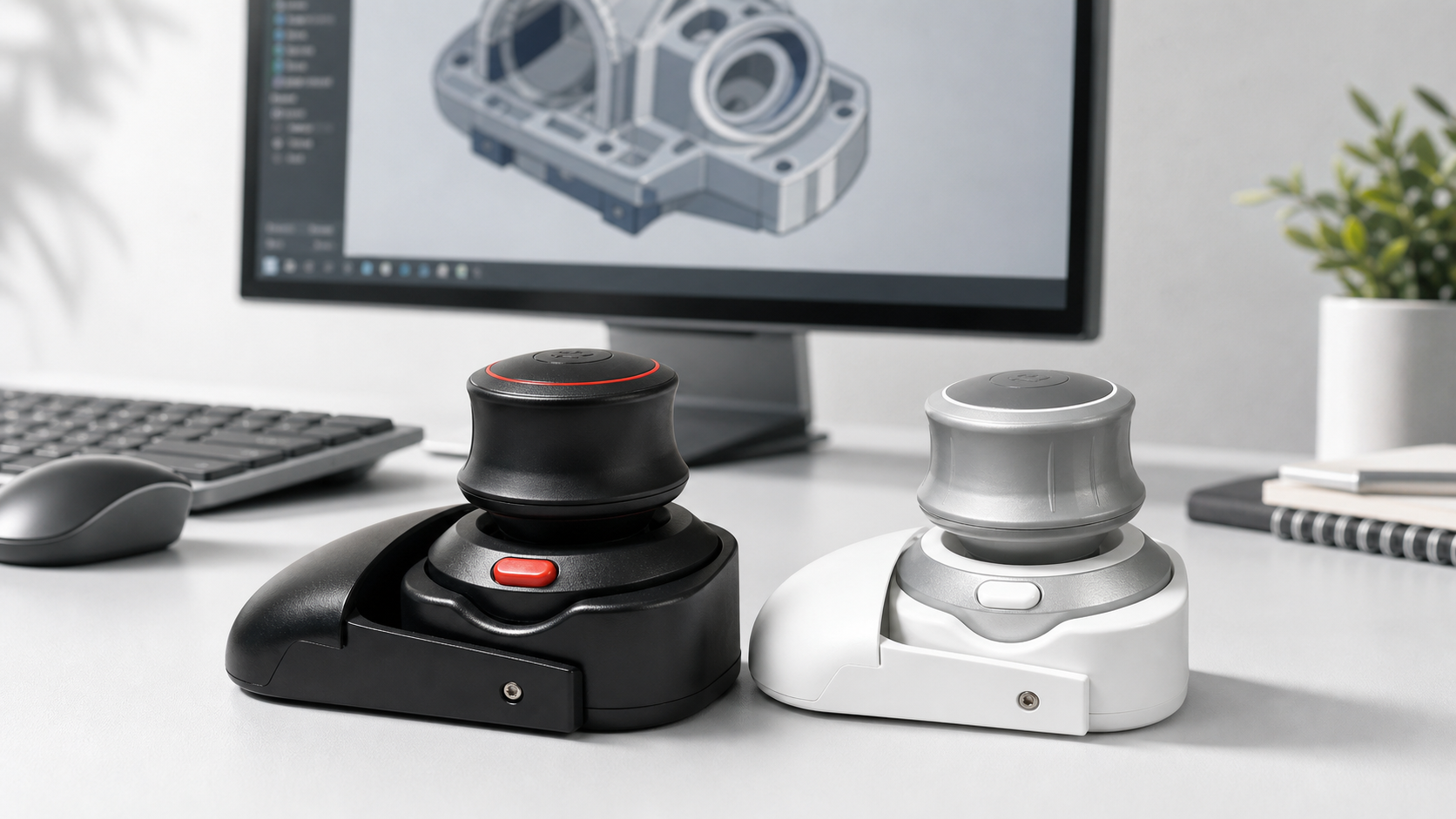
The Wireless 3D CAD Mouse can support CAD, 3D modeling, Blender workflows, VR scene navigation, and Google Earth style movement, but each environment deserves its own short setup check.
FAQ
Why does my 3D mouse feel different in every app?
Applications use different camera models, sensitivity behavior, focus rules, and shortcut conventions.
Should I force all apps to match?
Match the important habits if possible, but do not waste hours chasing identical behavior across tools.
What should I test after switching software?
Axis direction, sensitivity, zoom behavior, app focus, and one real task from that software.
How long does adaptation take?
Often a few focused sessions. A short warmup speeds up the transition.
Bottom line
Switching software is a navigation reset, not a failure. Identify the old habit, test one axis at a time, warm up inside the new app, and keep brief notes. Your 3D mouse will feel more consistent because your process is consistent.