
Blog
3D Mouse Travel Setup for Designers on the Move
Jul
Designers who travel with CAD or 3D modeling tools need a setup that survives small tables, client offices, classrooms, hotel desks, and laptop-only work. A 3D mouse can still be useful on the move, but only if the travel kit stays simple and reliable.
The mistake is packing like you are rebuilding your full workstation. Travel work has different priorities: fast pairing, compact layout, charged devices, known software behavior, and a safe way to carry the controller.
Pack the minimum reliable kit
Start with the laptop, charger, regular mouse, 3D mouse, a known-good charging cable, and any adapter you truly need. Do not depend on a random cable at the client site. If the device matters during a review, carry the cable that you know works.
Use a small pouch or protected pocket for the controller. Loose travel with keys, tools, or metal adapters can scratch the surface or damage the charging area.
Test pairing before leaving
Pair the device at home or in the studio before the trip. Open the exact software and model you expect to use. Confirm movement, sensitivity, and app focus. This takes minutes and prevents the awkward meeting-room version of troubleshooting.
If you will present a design, also test a backup path. Know how to navigate with the regular mouse and keyboard if Bluetooth conditions are poor. The goal is confidence, not dependence on one input method.
Plan for small surfaces
Travel desks are often shallow. Place the regular mouse where selection is comfortable, then place the 3D mouse where the other hand can rest without blocking the keyboard. If the table is tiny, lower sensitivity so you can use smaller hand movements.
For more layout thinking, see 3D mouse setup for left-handed and right-handed users. The same principles apply when the desk is temporary.
Use travel to simplify your workflow
Do not bring every model and every app into a travel review. Prepare a clean file, a small scene, or a saved view list. The 3D mouse should help you move through a prepared story, not improvise through a messy project folder.
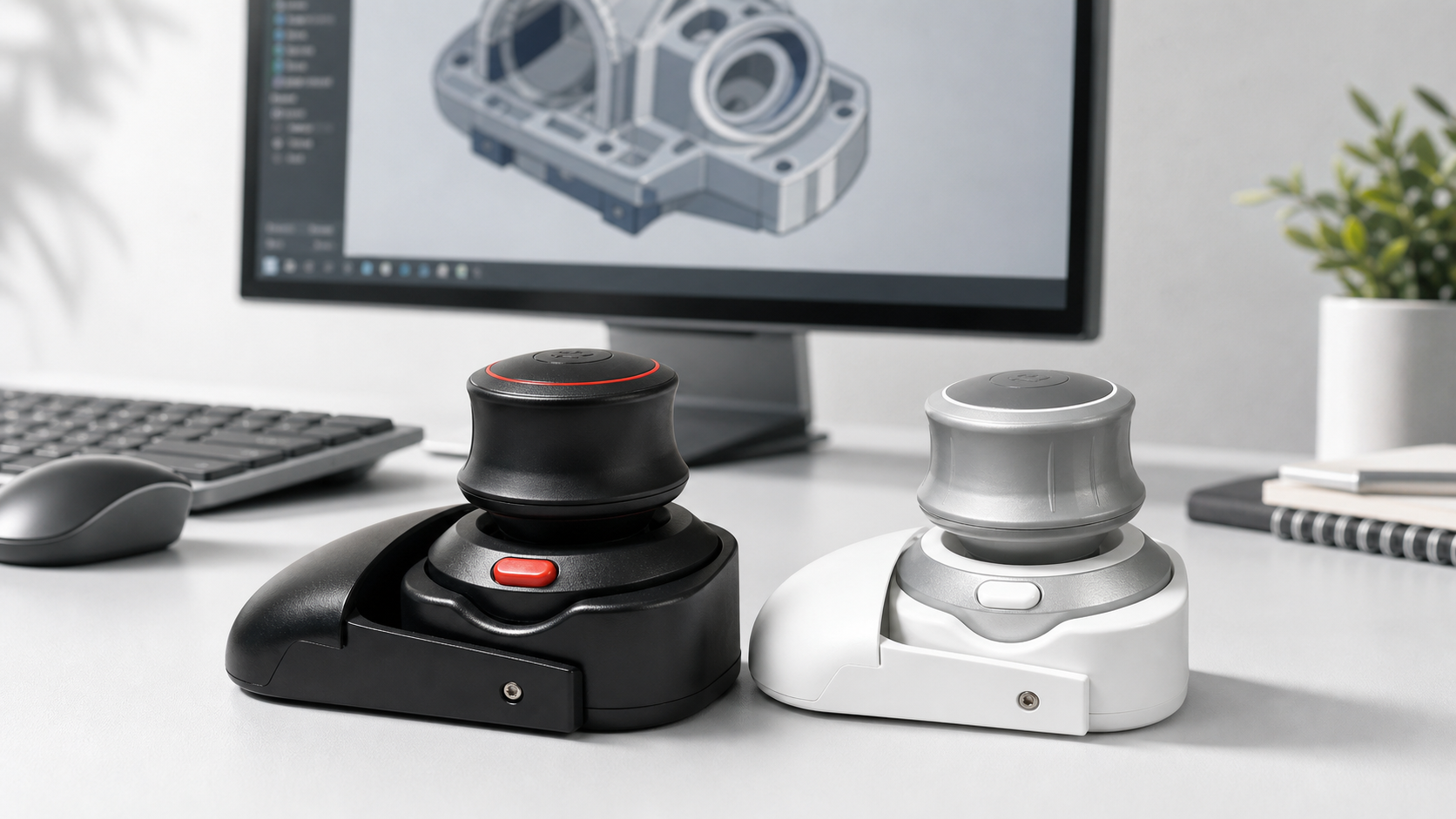
The Wireless 3D CAD Mouse is a practical fit for travel because it is compact and Bluetooth-based. Its travel value depends on preparation: charged battery, tested pairing, and a desk layout you can recreate quickly.
FAQ
Should I carry a 3D mouse for every trip?
Carry it when you expect model review, CAD editing, teaching, or presentation work that benefits from smoother navigation.
What is the most important travel accessory?
A known-good charging cable or adapter. Small cable failures create large delays.
Can airport or office Bluetooth environments cause issues?
Busy wireless environments can add uncertainty, so test early and keep a regular-mouse backup.
How should I protect it in a bag?
Use a pouch or separate compartment so the cap, buttons, and charging port are not pressed by hard objects.
Bottom line
A travel 3D mouse setup should be boring in the best way: charged, paired, protected, and tested before the meeting. Keep the kit small, prepare the model, and let the controller support the review instead of becoming the review.