
Blog
3D Mouse Setup for Left-Handed and Right-Handed Users
Jul
Most 3D mouse advice assumes one layout: regular mouse in the right hand, 3D mouse in the left hand, keyboard in the middle. That setup works for many people, but it is not the only valid arrangement. Left-handed users, compact desks, laptop users, and people with wrist discomfort may need a different layout.
The goal is a workstation where both hands have clear jobs and neither device crowds the other. A 3D mouse should make navigation calmer, not force your shoulders, wrists, or keyboard into awkward positions.
Start with hand roles, not handedness labels
Ask what each hand does best. One hand usually handles selection with the regular mouse. The other handles view movement with the 3D mouse. The keyboard supports commands and shortcuts. That role split matters more than whether the user is left- or right-handed.
Some left-handed users may keep the regular mouse on the left and place the 3D mouse on the right. Others may still prefer the standard two-hand CAD layout. Test both before deciding.
Protect keyboard access
The 3D mouse should not block common keys. If you constantly reach around the controller for escape, shift, control, command, numbers, or CAD shortcuts, the layout is too crowded. Move the device outward or angle the keyboard slightly.
This is especially important if you keep many shortcuts on the keyboard. The guide on 3D mouse shortcuts and keyboard roles can help you decide which actions belong where.
Check wrist and shoulder position
Comfort problems often come from reach distance. If the 3D mouse sits too far away, your shoulder works all day. If it sits too close, your wrist may bend sharply. Place it where your hand can rest lightly with the forearm relaxed.
Do a five-minute navigation test and then notice your posture. A technically correct layout is not good if it creates tension after a few minutes.
Adapt for laptops and small desks
On a small desk, put the 3D mouse on the side with the least cable clutter and easiest reach. Wireless devices help because you can move them during sketching, typing, or review sessions.
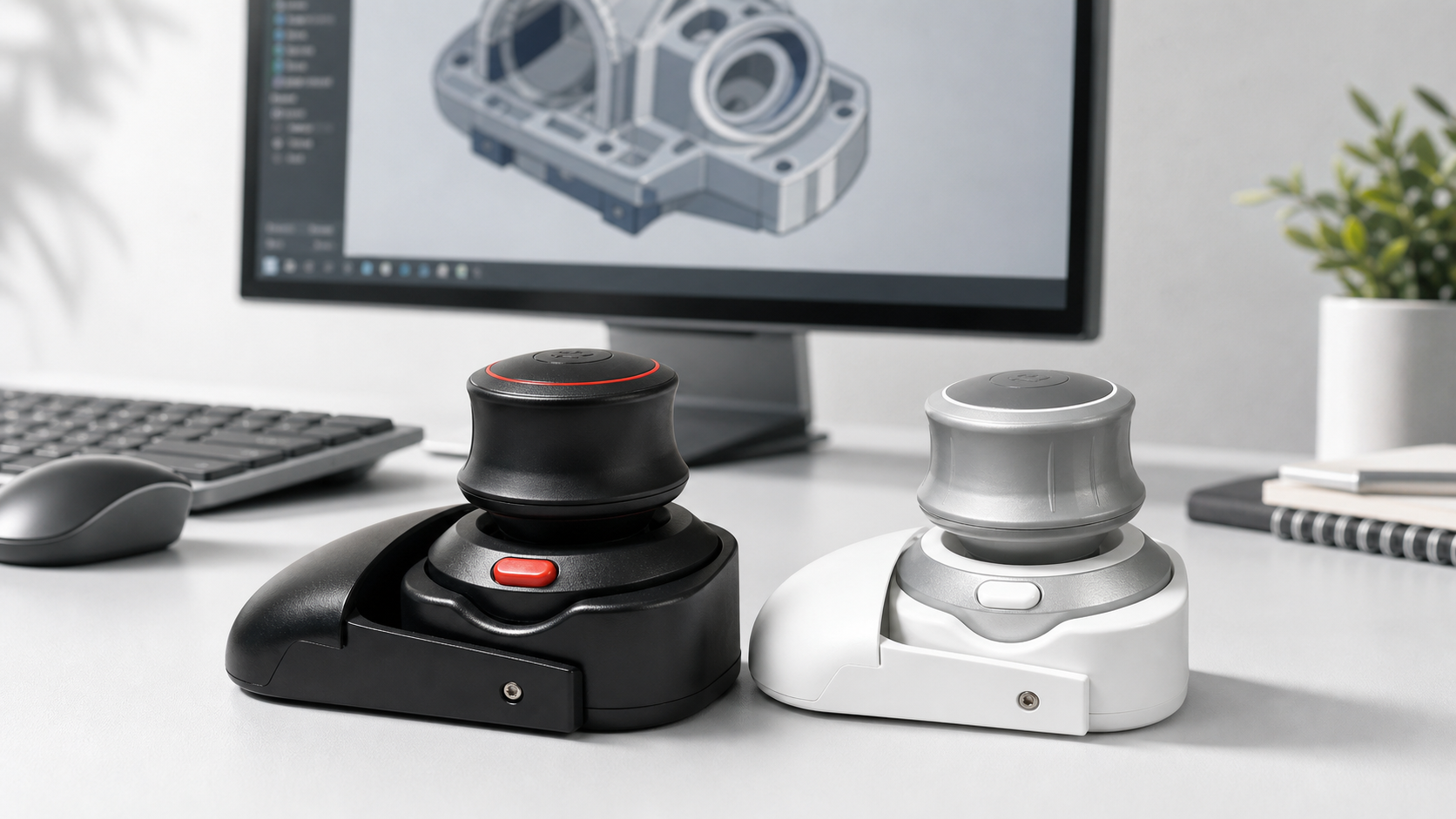
The Wireless 3D CAD Mouse is compact enough for flexible layouts, including laptop CAD setups. Test it on both sides of the keyboard and keep the arrangement that feels natural after a real modeling session.
FAQ
Should left-handed users put the 3D mouse on the right?
Often yes, if the regular mouse stays on the left. But the best answer is the layout that keeps selection precise and navigation relaxed.
Can I switch sides between tasks?
You can, but constant switching slows learning. Choose one default layout for serious work.
How far from the keyboard should it sit?
Close enough for relaxed reach, far enough that it does not block common keys.
What if my wrist hurts?
Stop, reduce reach, check desk height, and try a lower-effort hand position before continuing.
Bottom line
There is no universal left-handed or right-handed 3D mouse setup. Build around hand roles, keyboard access, and comfort. When the layout is right, navigation feels like a natural second-hand task instead of another object fighting for desk space.