
Blog
3D Mouse for Architecture Students
Jul
Architecture students live inside models: studio studies, site masses, room layouts, circulation diagrams, facade ideas, and portfolio scenes. A 3D mouse can make that model movement smoother, but it has to compete with a student budget and a long list of other tools.
The smart question is not whether the device looks professional. The smart question is whether it helps enough during studio work, critique preparation, and portfolio presentation to justify the cost.
Studio workflow fit
During studio work, a student may move constantly between plan thinking and spatial thinking. A 3D mouse helps most when you are checking how spaces connect, how a mass reads from different sides, or how a path feels through a model.
If your work is still mostly 2D drafting or early sketching, the benefit may be smaller. The device becomes more useful as 3D modeling becomes a regular part of how you explore and explain design.
Critiques and walkthroughs
In a critique, smooth navigation can help you guide the conversation. Instead of jumping randomly through views, you can move from site context to entry sequence, then to interior space and facade detail. That makes the model easier for others to follow.
Practice before the review. A controller helps only if the movement is calm and intentional. The article on 3D mouse architecture walkthroughs gives a more detailed review frame.
Budget reality
Students should not buy every accessory at once. A reliable computer, required software, backup storage, and basic input devices usually come first. A 3D mouse is more reasonable when you already know that 3D navigation slows you down or makes presentations harder.
Borrow one, test one in a lab, or buy from a source with a clear return policy if possible. Use a real studio model for the test, not a manufacturer demo file.
A good student test is simple: open the current studio project, walk from site view to one interior moment, then save two portfolio angles. If the controller helps that sequence feel calmer, the benefit is real enough to consider.
Compatibility questions
Before buying, list your actual tools: SketchUp, Rhino, Revit, Blender, Archicad, Vectorworks, or other studio software. Check whether your operating system and applications support the device behavior you expect. Browser-based tools may differ from desktop tools.
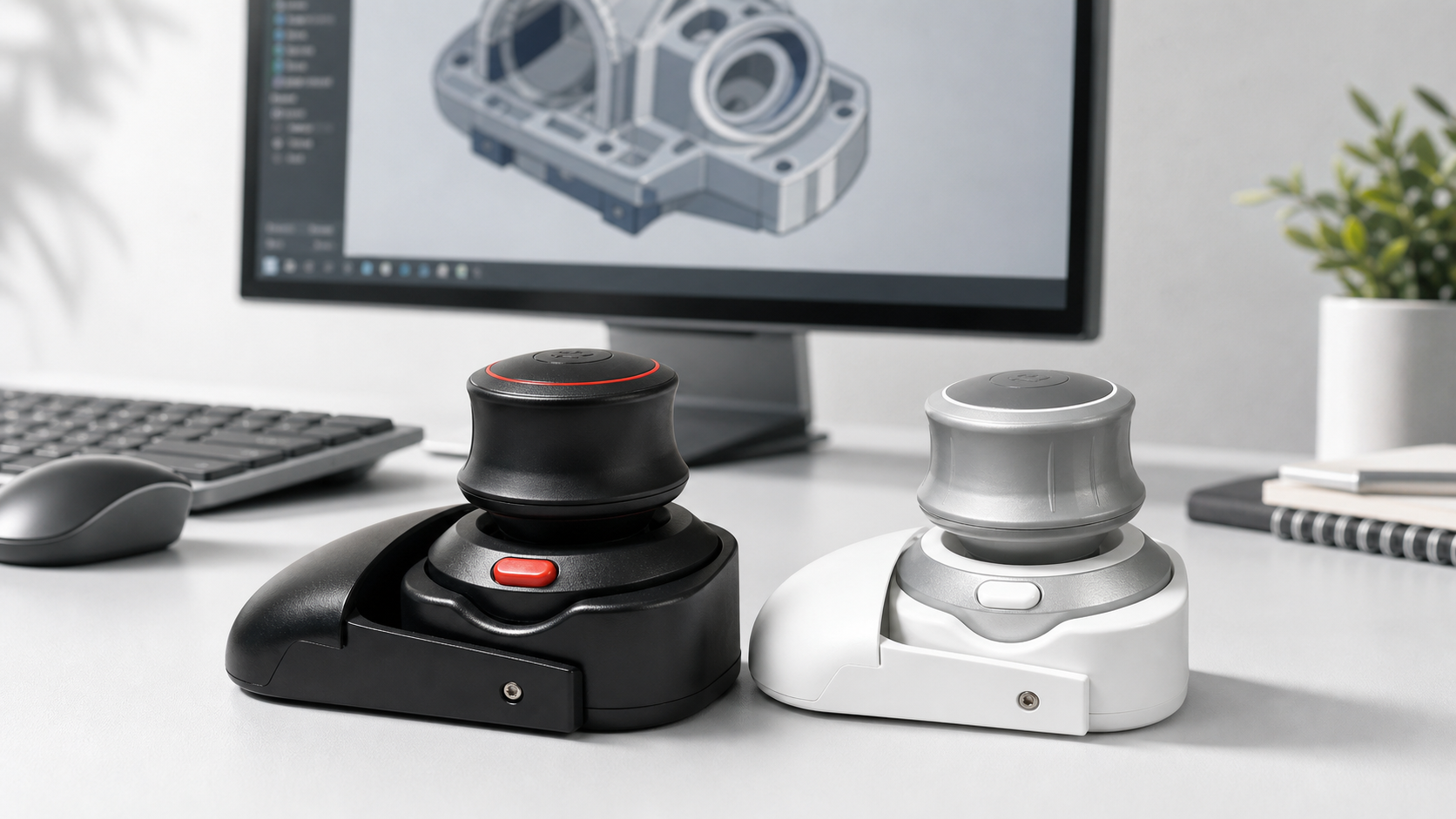
The Wireless 3D CAD Mouse can be a compact way to test dedicated navigation for architecture school, especially on a small desk or laptop setup. Confirm software behavior first.
FAQ
Should architecture students buy a 3D mouse?
Only if 3D model navigation is a frequent part of studio work or presentations.
Is it useful for critiques?
Yes, when you practice a clear walkthrough path and avoid sudden camera movement.
What should students check before buying?
Software support, operating system behavior, desk space, budget, and return policy.
Can it help with portfolios?
It can help plan cleaner views and walkthroughs, but portfolio quality still depends on design and presentation work.
Bottom line
A 3D mouse is not a required architecture-school purchase, but it can be useful when studio work depends on 3D navigation and model walkthroughs. Test it with your real software and budget in mind.