
Blog
3D Mouse for Makers and DIY Product Builders
Jul
Makers and DIY product builders often move between hobby CAD, 3D printing, CNC prep, enclosure design, and quick prototype reviews. A 3D mouse can help if model inspection is a repeated part of that process, especially when small mistakes become failed prints or awkward assemblies.
The device is not a substitute for CAD skill. It is a navigation accessory. Its job is to make it easier to look around the thing you are already designing.
Hobby CAD and 3D printing checks
Many maker projects start with a simple model and become more complicated: snap fits, screw bosses, cable exits, battery compartments, brackets, and moving parts. A 3D mouse can make it easier to inspect those details from several angles before printing.
For 3D printing, use it to look for overhangs, wall conflicts, hidden gaps, and awkward access areas. It does not replace slicer checks, but it can help you catch design issues earlier in CAD.
CNC prep and enclosure design
For CNC or laser-adjacent work, spatial review matters when parts need to fit together. You may need to inspect tabs, holes, pockets, fixtures, and assembly order. Smooth navigation helps because you can move from full context to detail without losing orientation.
Enclosures are a strong use case. Rotate around ports, buttons, lids, fasteners, and internal clearances. The article on 3D mouse checks for 3D printing design covers similar inspection habits.
When the accessory is justified
A maker who opens CAD once a month may not need another device. A maker who spends several evenings per week designing, revising, printing, and checking fit may get more value. The break-even point is repetition.
Use a real project as the test: a case, bracket, jig, mount, or mechanical prototype. If the controller helps you find design issues faster or present the model more clearly, it has a role in the workshop.
Small-workshop desk setup
Maker desks are often crowded. Keep the 3D mouse away from soldering debris, cutting tools, glue, dust, and loose hardware. Place it beside the keyboard where your non-selection hand can rest lightly.
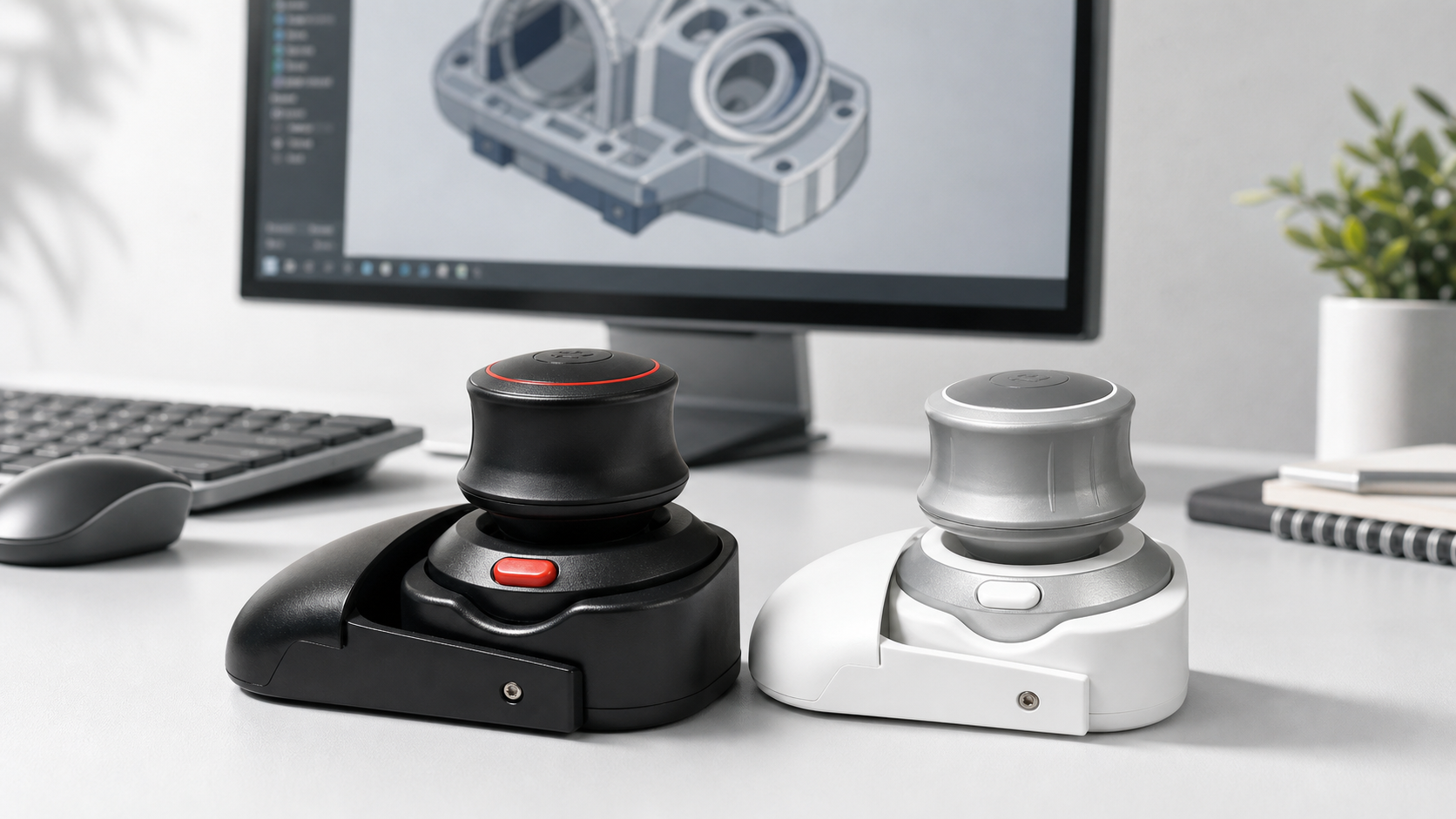
The Wireless 3D CAD Mouse is compact enough for small desks and laptop maker setups. Its best use is dedicated CAD navigation, not surviving rough bench abuse, so store it like an electronic design tool.
FAQ
Is a 3D mouse useful for makers?
It is useful when you inspect and revise 3D models often, especially for printed or assembled parts.
Does it help with 3D printing?
It can help you inspect geometry before slicing, but slicer previews and print settings still matter.
Should beginners buy one immediately?
Learn basic CAD first. Add the controller when navigation becomes a repeated frustration.
How should I protect it in a workshop?
Keep it away from dust, metal chips, liquids, adhesives, and loose tools.
Bottom line
For makers, a 3D mouse is worth considering when model review is part of the build cycle. It supports CAD inspection, enclosure design, and prototype explanation, but it should live in the clean design area of the workspace.