
Blog
3D Mouse for Furniture and Interior Modeling
Jul
Furniture and interior modeling are about space, scale, and sightlines. A sofa can fit in plan view but feel wrong from a seated perspective. A cabinet can look balanced alone but crowd the room when placed with doors, windows, and circulation paths. A 3D mouse can help by making spatial review smoother.
The device is most useful when you repeatedly move through rooms, inspect furniture placement, and explain layout decisions to clients, teammates, or classmates.
Room walkthroughs need readable movement
Interior models are often reviewed as a path: entry, circulation, focal wall, seating area, storage, window view, and detail zones. Smooth navigation helps others understand that path without losing orientation.
Fast spinning is not helpful. Slow movement, pauses, and saved views make a walkthrough easier to follow. This is similar to architecture model review, covered in 3D mouse architecture walkthroughs.
Furniture placement and spacing
A 3D mouse can help you inspect gaps, access paths, table height, cabinet clearance, appliance placement, and how furniture reads from different angles. The benefit is strongest when you move between full-room context and close details.
Use it with measurement tools, not instead of them. Smooth navigation can reveal a possible spacing issue, but dimensions confirm whether the design actually works.
For furniture, test both eye-level and overhead views. A room can look balanced in plan while feeling cramped from a seated or standing perspective. Moving between those views helps catch that mismatch earlier.
Software fit varies
SketchUp, Blender, BIM tools, and interior design platforms may handle 3D controllers differently. Do not assume identical behavior across every application. Test the device in the software where you actually build and present rooms.
If your workflow is mostly browser-based, check focus behavior and supported input methods before relying on the controller for a client presentation.
Client and portfolio presentation
For presentation, prepare a route. Start with the full room, move to the key furniture arrangement, pause at functional details, and return to the overall design. A 3D mouse can make that route feel more natural if you practice beforehand.
Use saved scenes for major stops and the controller for the movement between them. That combination keeps the story structured while still letting the review feel spatial.
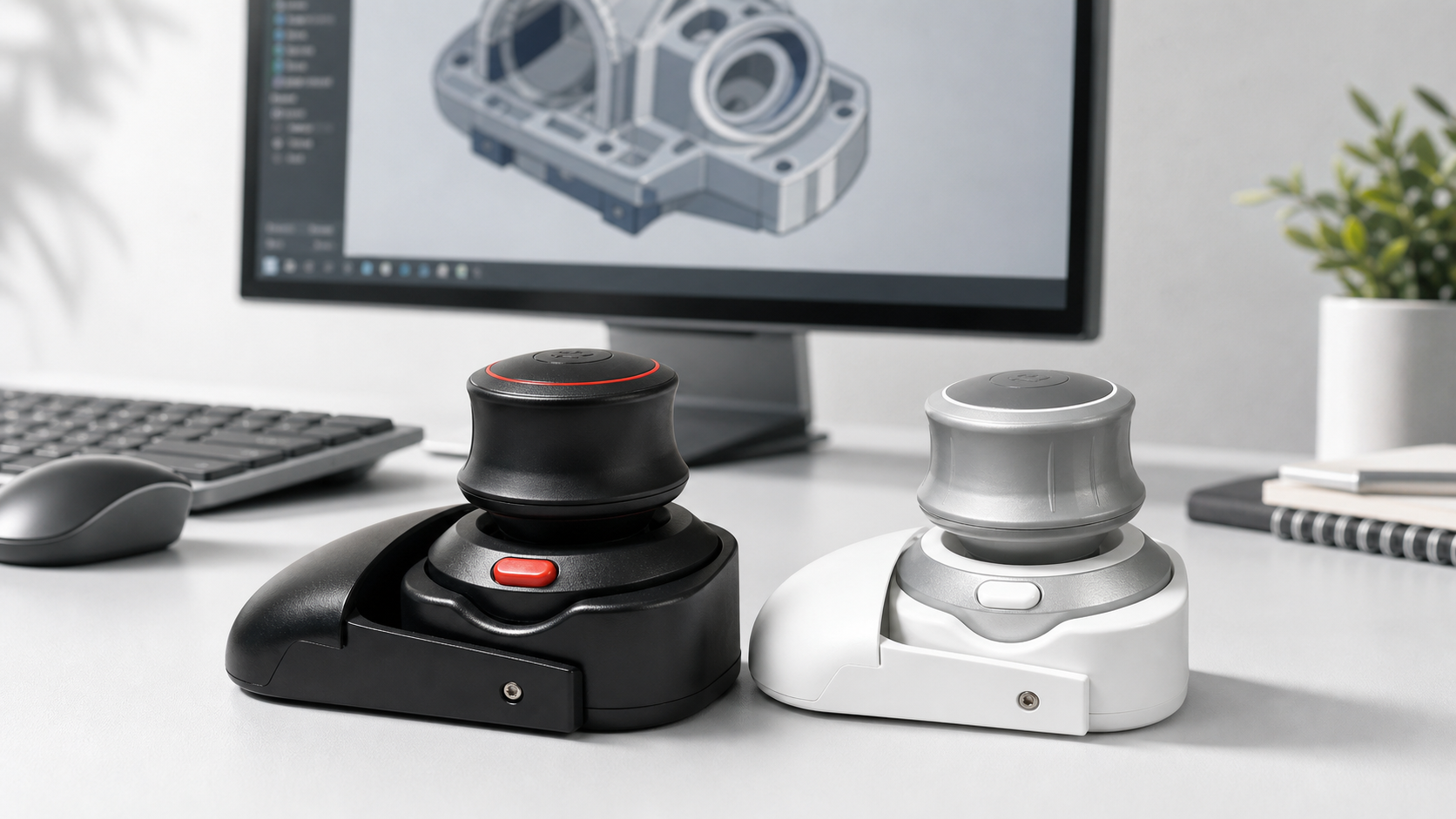
The Wireless 3D CAD Mouse is a compact Bluetooth option for designers who want smoother spatial navigation at a desk or laptop. Its value depends on software support and your need for repeated room review.
FAQ
Is a 3D mouse useful for interior design?
It can be useful when you review rooms, furniture placement, sightlines, and walkthroughs often.
Does it replace measurements?
No. It helps you inspect space, but measurements still decide fit and clearance.
Which software should I test?
Test the exact tools you use, such as SketchUp, Blender, BIM software, or your interior design platform.
Is it good for client presentations?
Yes, if movement is slow, planned, and practiced before the meeting.
Bottom line
Furniture and interior modeling benefit from smooth spatial review. A 3D mouse can support walkthroughs, placement checks, and presentation flow, but it should be paired with measurements and verified software support.