
Blog
3D Mouse for Windows CAD Workstations: Buying Checklist
Jul
A 3D mouse for a Windows CAD workstation should be easy to trust. Windows version, Bluetooth adapter, CAD software, driver permissions, and admin rights can all affect the first setup. A clean buying decision starts by checking the workstation, not only the device.
This is especially true in offices. A personal desktop, company workstation, school lab computer, and laptop dock can all behave differently. The device should be tested where the CAD work actually happens.
Windows setup questions
Check the Windows version, Bluetooth adapter quality, USB port availability, CAD software version, and whether you have admin rights to install drivers or settings tools. If the computer is managed by IT, ask about Bluetooth device rules before buying.
Also check whether you use one workstation or several. A device that pairs cleanly with one computer may be annoying if you move between a laptop, desktop, and conference room machine every week.
Drivers and input settings in plain language
Drivers and settings tools tell Windows and your CAD software how to interpret the device. They can affect axes, speed, button behavior, and app support. If the setup requires a driver, install only what the device maker recommends and verify that it works in the target software.
If the device works without much setup, still test carefully. Basic pairing is not the same as useful CAD navigation. Open a real assembly, part, or model review file and move through normal tasks.
Signs of a clean setup
A clean setup pairs predictably, reconnects after sleep, moves on the expected axes, feels controllable at normal speed, and does not interfere with your regular mouse or keyboard. The device should feel boringly reliable after the first day.
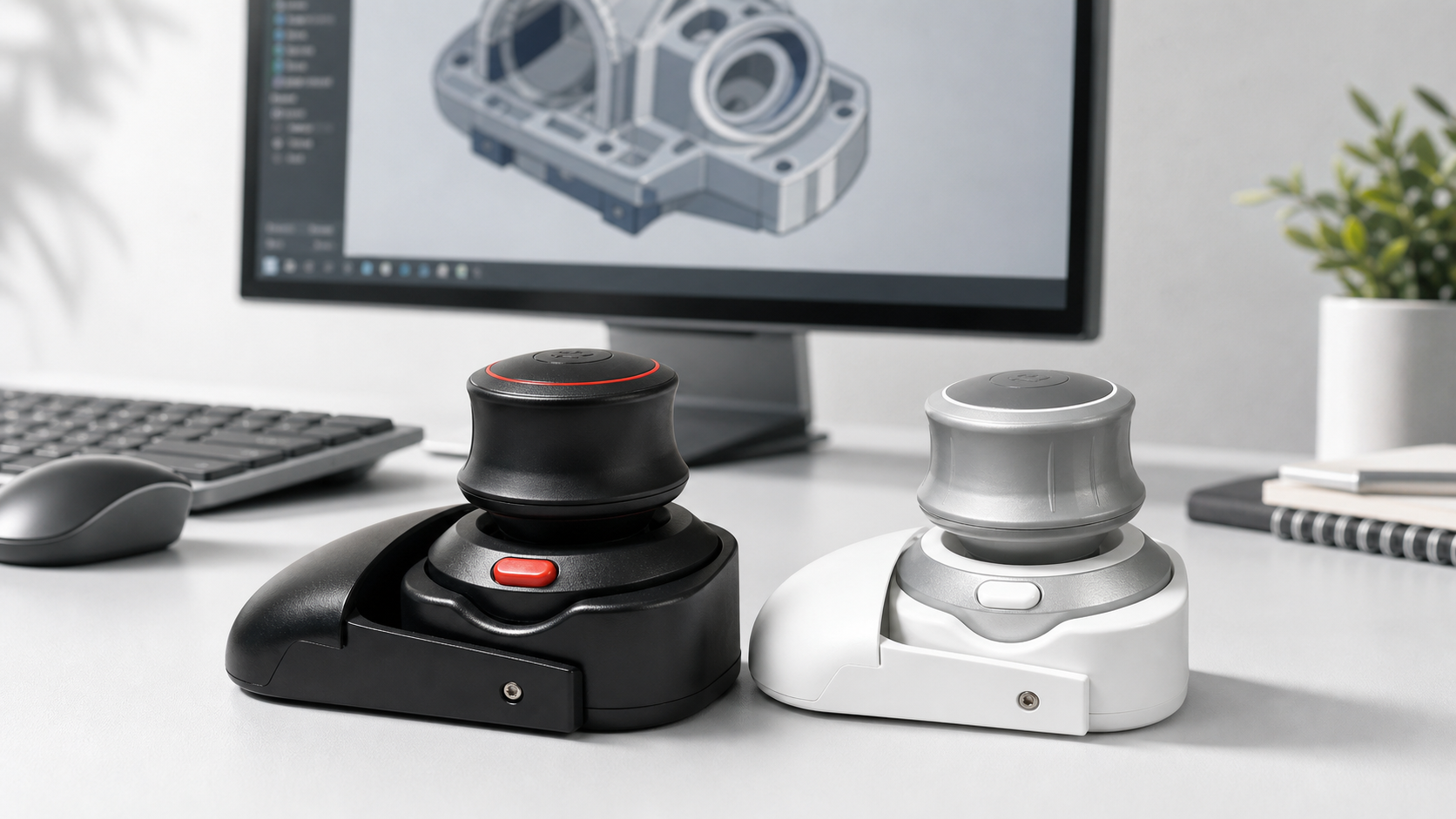
The Wireless 3D CAD Mouse belongs in the wireless setup checklist for Windows users who want compact Bluetooth navigation. Pair it with the broader wireless setup checks before buying.
Workstation fit
Think about the whole workstation: keyboard, regular mouse, monitor height, dock, tablet, and desk space. A 3D mouse is most useful when it has a consistent place and does not crowd the main mouse.
For Windows users, consistency is valuable. If the controller moves between too many USB hubs, Bluetooth adapters, and desks, troubleshooting can eat the time the device was supposed to save. Keep the first setup simple, document any driver settings, and only expand to other machines after the main CAD workstation feels stable.
FAQ
Do I need admin rights?
You may need admin rights if a driver or configuration utility is required. Managed computers should be checked with IT.
Is Bluetooth enough on Windows?
It can be, but adapter quality, sleep behavior, and pairing stability should be tested.
What is a clean setup sign?
The device reconnects reliably, axes feel correct, speed is controllable, and CAD navigation works in real files.
Should office teams test one first?
Yes. Test one device on the real workstation image before buying for multiple users.
Bottom line
A Windows CAD workstation needs predictable input. Before buying a 3D mouse, verify Windows, driver, Bluetooth, admin, and CAD behavior on the actual machine.