Blog
3D Mouse Moves Too Fast: How to Tune Navigation Speed
Jul
If a 3D mouse moves too fast, the device may not be wrong. The sensitivity may simply be too high for the model, app, or task. Fast movement can feel exciting during a demo and terrible during precise CAD work. Tuning navigation speed is part of learning the device.
The goal is controlled movement. You should be able to orbit around small details, pan without overshooting, and zoom without losing the model.
Sensitivity and acceleration in plain language
Sensitivity controls how much the view moves when you push or twist the controller. Acceleration changes how movement ramps up as input continues. If either feels too aggressive, the model may fly across the screen or spin too quickly.
Different software may interpret input differently. A setting that feels good in Google Earth may be too fast for a small CAD part. A setting that works in Blender may need adjustment in a slicer or BIM model.
Step-down tuning method
Start too slow on purpose. Open a real model and reduce speed until movement feels almost boring. Then increase slowly until orbit, pan, and zoom feel comfortable. Test close-up details and full-model movement before deciding.
Change one setting at a time. If you change speed, acceleration, and axes together, you will not know which adjustment helped. This method also supports the broader 30-minute new 3D mouse test.
Small parts versus large scenes
Small CAD parts need slower movement. Assemblies, terrain, architecture walkthroughs, and game scenes may need broader movement. Some users keep different settings or habits for different software. If your device or app allows profiles, use them carefully.
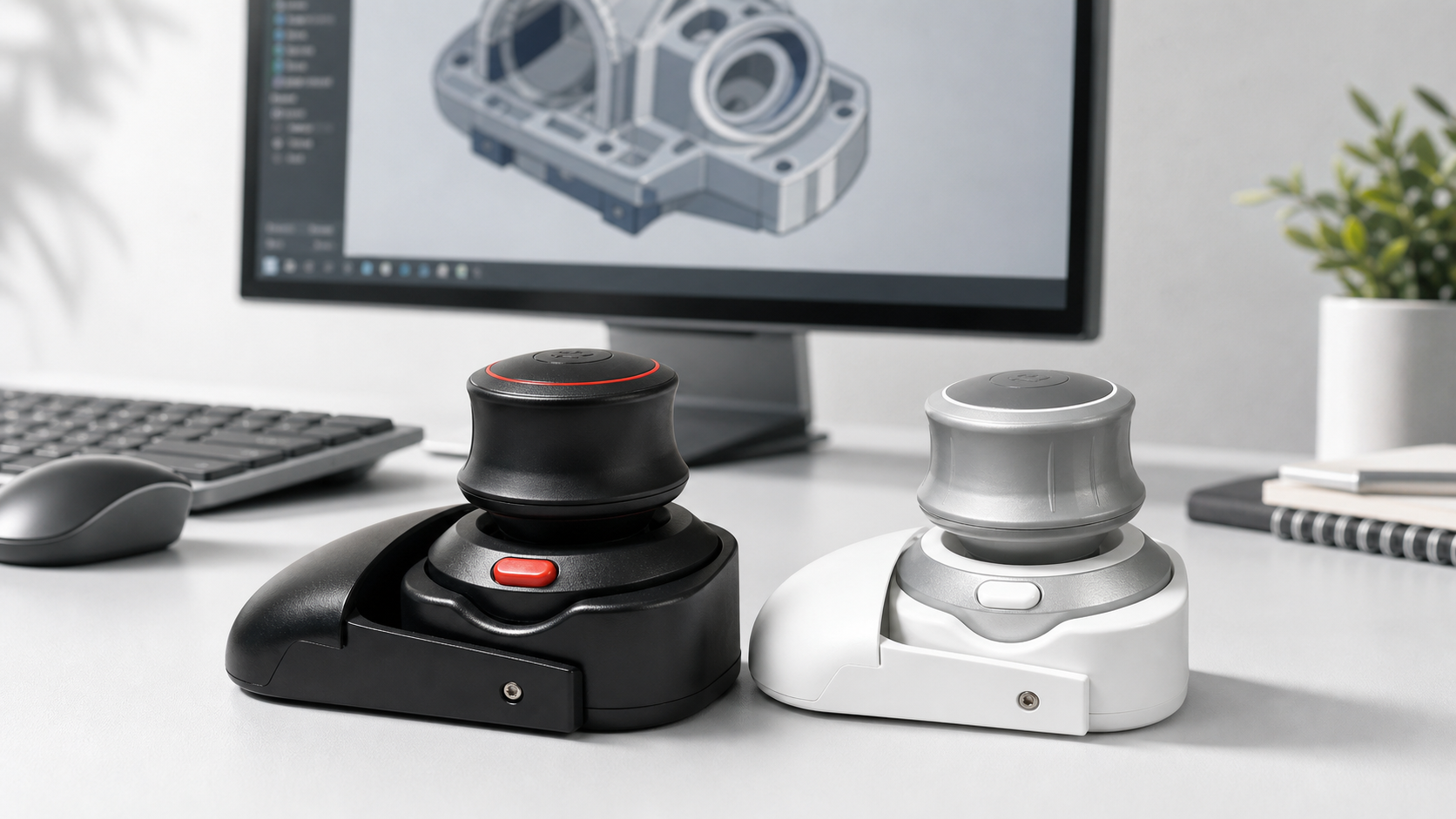
The Wireless 3D CAD Mouse can be tuned with the same thinking. Treat it as the device in the example: start slow, test real models, and increase speed only when control remains comfortable.
For precise CAD, use a part with holes, edges, and small features. For scene work, use a room, terrain, or environment. The point is to tune against the work, not against an empty screen. If one speed cannot serve every task, use separate app settings or accept a middle ground.
Do not chase perfect speed in the first minute. Use the slower setting for a full task, then adjust after your hand understands the device. Early over-tuning can make learning harder and less predictable.
FAQ
Why does my 3D mouse feel uncontrollable?
Sensitivity may be too high, acceleration may feel aggressive, or the model scale may require slower movement.
Should I tune with an empty file?
No. Use the kind of model or scene you actually work with.
Can different apps need different settings?
Yes. CAD, Blender, Google Earth, and scene editors may feel different.
What is the safest tuning method?
Start slow, change one setting at a time, and test close-up plus full-model movement.
Bottom line
A 3D mouse that moves too fast usually needs tuning, not panic. Slow it down, test with real work, and increase speed only when control stays precise.