
Blog
Compact 3D Mouse Buying Guide for Small Desks
Jul
A compact 3D mouse should mean more than small dimensions. It should fit the desk, the hand, the workflow, the travel bag, and the learning curve. A tiny device that is uncomfortable or hard to control is not a good compact option. A compact device should make CAD navigation easier without taking over the workspace.
This matters for laptop CAD users, students, classrooms, shared desks, and small studios. Space is limited, but 3D navigation still needs to feel deliberate and stable.
What compact should mean
Compact means the device can sit beside a normal mouse and keyboard without forcing awkward hand positions. It should be easy to reach, easy to move, and stable enough that it does not slide around during navigation. It should also be simple to store when the desk needs to become something else.
Compact does not mean weak. A smaller controller still needs reliable orbit, pan, zoom, sensitivity control, and compatibility with the software you use. The goal is a smaller footprint, not a compromised workflow.
Travel, classroom, and shared desk scenarios
Travel workflows benefit from wireless pairing, durable storage, and quick setup. Classroom workflows benefit from simple operation and fewer cables. Shared desks benefit when the device can be removed easily and does not require complicated installation every time.
For small workstations, look at the whole setup: laptop stand, keyboard, normal mouse, charger, notebook, and model review space. The small workstation setup guide is a useful companion before buying.
Tradeoffs versus larger premium devices
Larger premium devices may offer more buttons, heavier build, deeper software ecosystems, or more advanced configuration. Compact alternatives may focus more on core navigation and portability. Neither is automatically better. The right answer depends on how much integration and desk permanence you need.
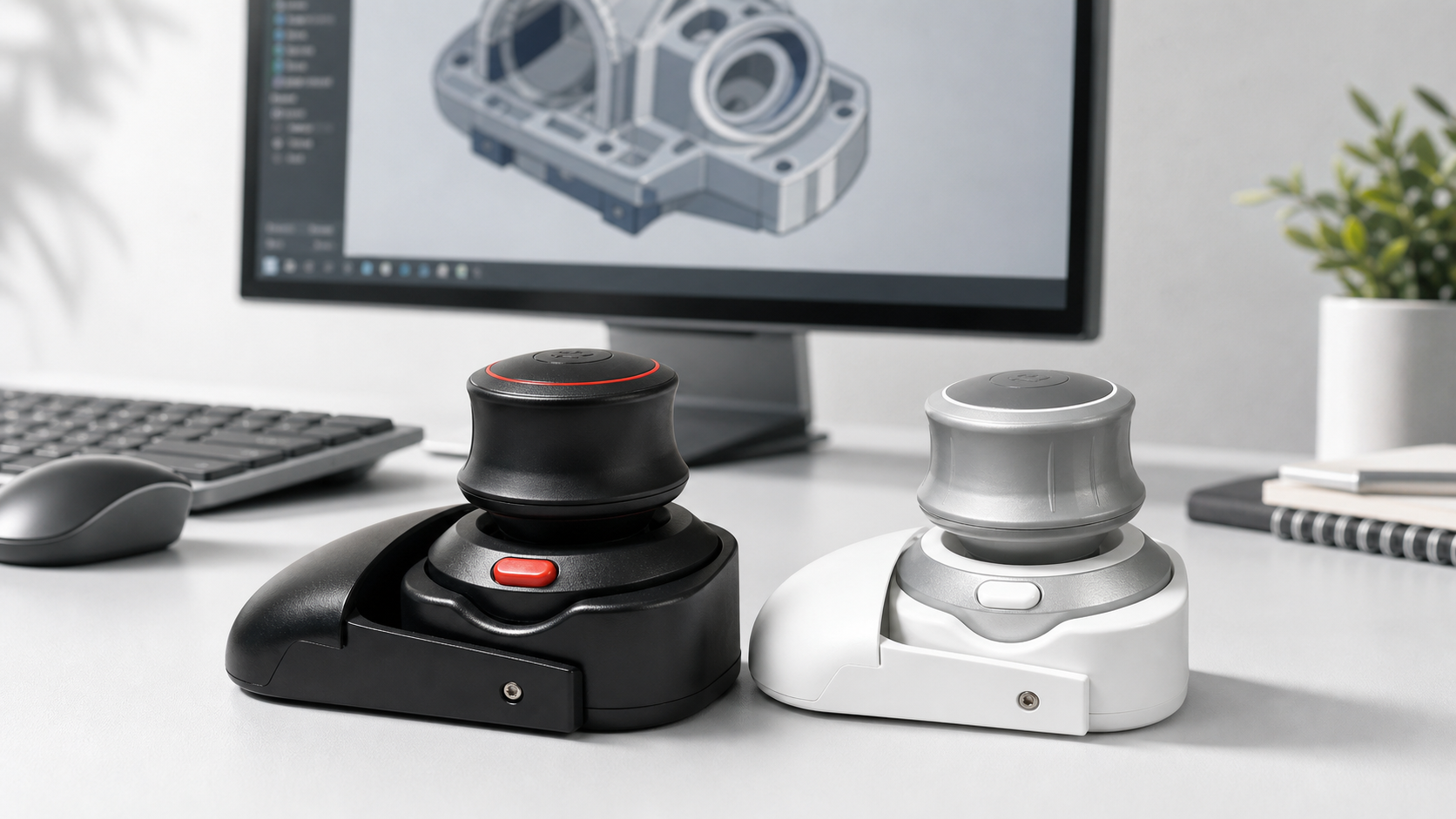
The Wireless 3D CAD Mouse is a compact wireless CAD controller option for users who want Bluetooth navigation without a large desk footprint. It makes the most sense when core spatial movement matters more than a large button surface.
How to evaluate fit
Place a paper template or similarly sized object beside your mouse and keyboard. Move your hands through a normal CAD session. If the second device feels crowded before you even buy it, a compact option is important. If the desk is fixed and spacious, size may matter less.
Also think about storage. A compact device should be easy to put away, protect in a bag, and bring back out without a long setup ritual.
FAQ
Is compact always better?
No. Compact is better when desk space, travel, or portability matters. Larger devices may suit permanent workstations.
What should small-desk users test?
Test hand position, cable clutter, wireless pairing, device stability, and whether the normal mouse still has room.
Can compact devices work for serious CAD?
They can, if the user’s main need is core navigation and the software setup behaves well.
Who should avoid compact devices?
Users who need many programmable controls, heavy hardware, or a mature premium ecosystem may prefer larger options.
Bottom line
A compact 3D mouse is worth considering when it saves desk space without weakening navigation. Judge the whole workstation, not just the product dimensions.