
Blog
3D Mouse for Small Engineering Teams
Jul
Small engineering teams should be careful with accessories. A tool that helps one engineer may sit unused on another desk. A 3D mouse can support review meetings, assembly inspection, and shared model discussion, but it should be tested before the team buys devices for everyone.
The goal is not to standardize for the sake of standardizing. The goal is to find whether dedicated 3D navigation improves the work the team actually repeats.
Start with shared use cases
Start by naming where the team spends time navigating models: weekly design reviews, supplier file checks, assembly clearance discussions, prototype planning, customer demos, or manufacturing handoffs. Those are better signals than individual curiosity.
If the team mostly works in 2D drawings, spreadsheets, procurement, or documentation, a 3D mouse may be a lower priority. If 3D model review drives decisions, it deserves a pilot.
The best shared use case is one where several people benefit from the same smoother view. If only one person is curious, treat it as an individual trial. If meetings regularly slow down because the model is hard to navigate, treat it as a team workflow question.
Pilot one or two devices
Buy or test one or two controllers first. Give them to people with different workflows: one heavy CAD user and one review-heavy engineer, for example. Ask them to keep notes for two weeks.
Useful notes include software used, model type, meeting use, comfort, sensitivity changes, and whether the device helped explain issues. The buying checklist in 3D mouse kit review checklist works well for a team pilot.
At the end of the pilot, ask for examples rather than opinions. “It helped during the pump assembly review” is more useful than “it felt nice.”
Respect individual preference
Some engineers will love a 3D mouse. Some will prefer keyboard and regular mouse habits. Both can be reasonable. A team standard should not force a slower workflow on people who already work efficiently.
Instead, standardize the support process: recommended sensitivity starting point, desk layout notes, compatible software list, and meeting-room setup. Let individual users opt in where it helps.
Use it in review meetings
The strongest shared value may be in meetings. A controller can help one presenter move smoothly through an assembly while others discuss clearance, packaging, access, or serviceability. That can make the conversation easier to follow.
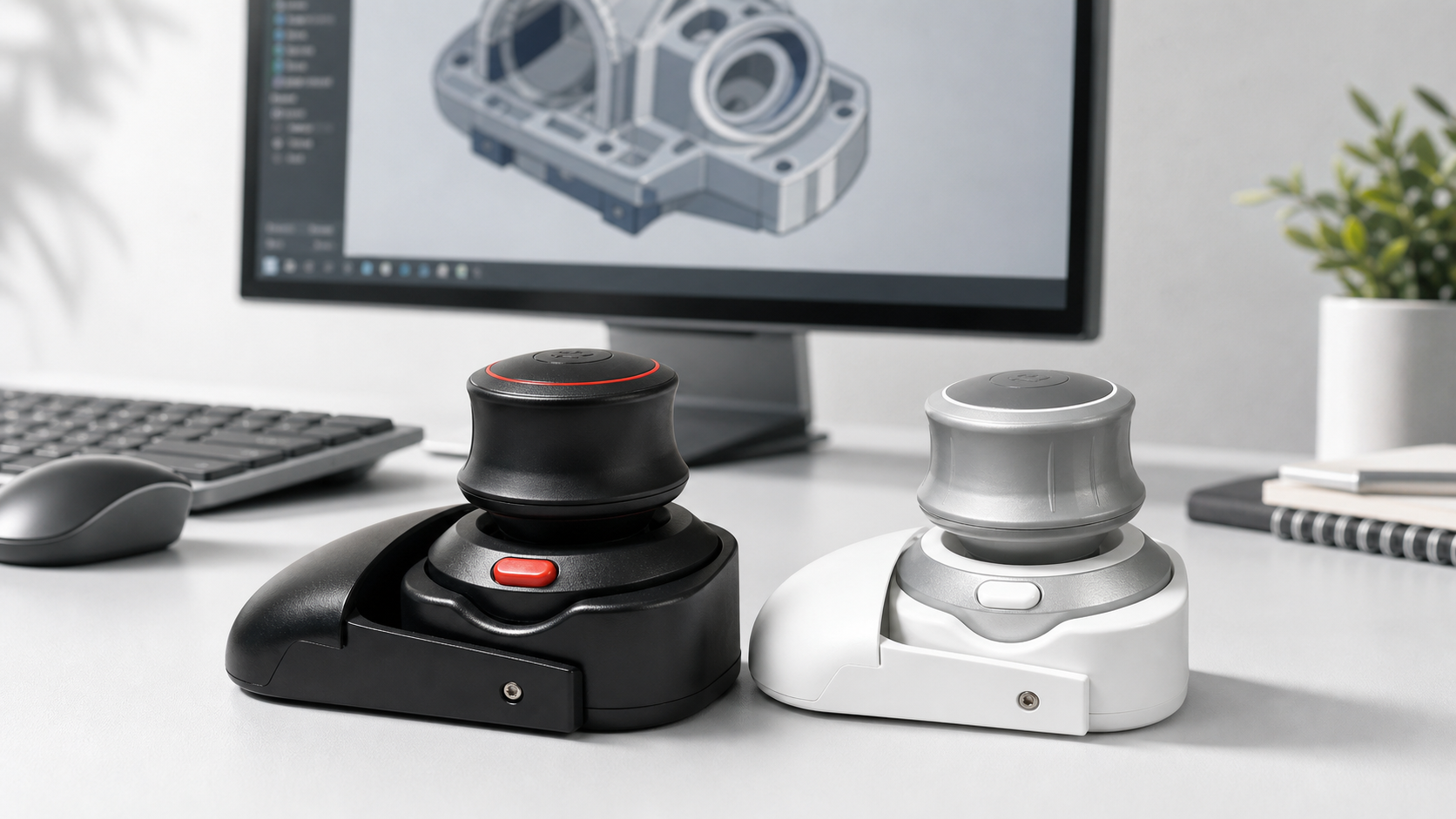
The Wireless 3D CAD Mouse can be piloted as a compact Bluetooth device for CAD review desks, small engineering teams, and shared meeting setups. Evaluate it with real team files.
FAQ
Should every engineer get a 3D mouse?
Not by default. Pilot first, then expand only where it improves repeated work.
What should a team pilot measure?
Review clarity, assembly inspection speed, comfort, software compatibility, and actual usage after the novelty fades.
Can one device be shared?
Yes, especially for a meeting room or review workstation, but personal settings may vary.
What if only one person likes it?
That can still be fine. Give it to the user whose workflow benefits most.
Bottom line
For small engineering teams, a 3D mouse is a pilot-worthy tool, not an automatic standard. Tie the decision to review meetings, assembly inspection, and real team habits before buying broadly.