
Blog
3D Mouse Kit Review Checklist: How to Evaluate It in Your Workflow
Jul
A fair 3D Mouse Kit review should be based on your own workflow, not only first impressions. Input devices can feel exciting for a few minutes and still fail to earn a permanent place on the desk. A good review checks comfort, navigation, pairing, price-value, and whether real work improves.
The goal is not to prove the product perfect. The goal is to decide whether it helps your CAD, 3D modeling, map, or scene review work enough to keep using it.
Test plan for your own software
Use the software you care about most. Open a real model or scene, not an empty file. Spend time orbiting, panning, zooming, inspecting details, and returning to overview views. If your workflow includes presentations, test a short walkthrough too.
Use at least two sessions. The first session may be affected by novelty. The second session reveals whether the controller is becoming useful or just interesting.
Comfort, navigation, pairing, and value
Comfort means the device sits naturally on the desk and does not crowd your normal mouse. Navigation means movement feels controllable at both small-detail and broad-scene speeds. Pairing means the Bluetooth connection is stable and easy to recover after sleep.
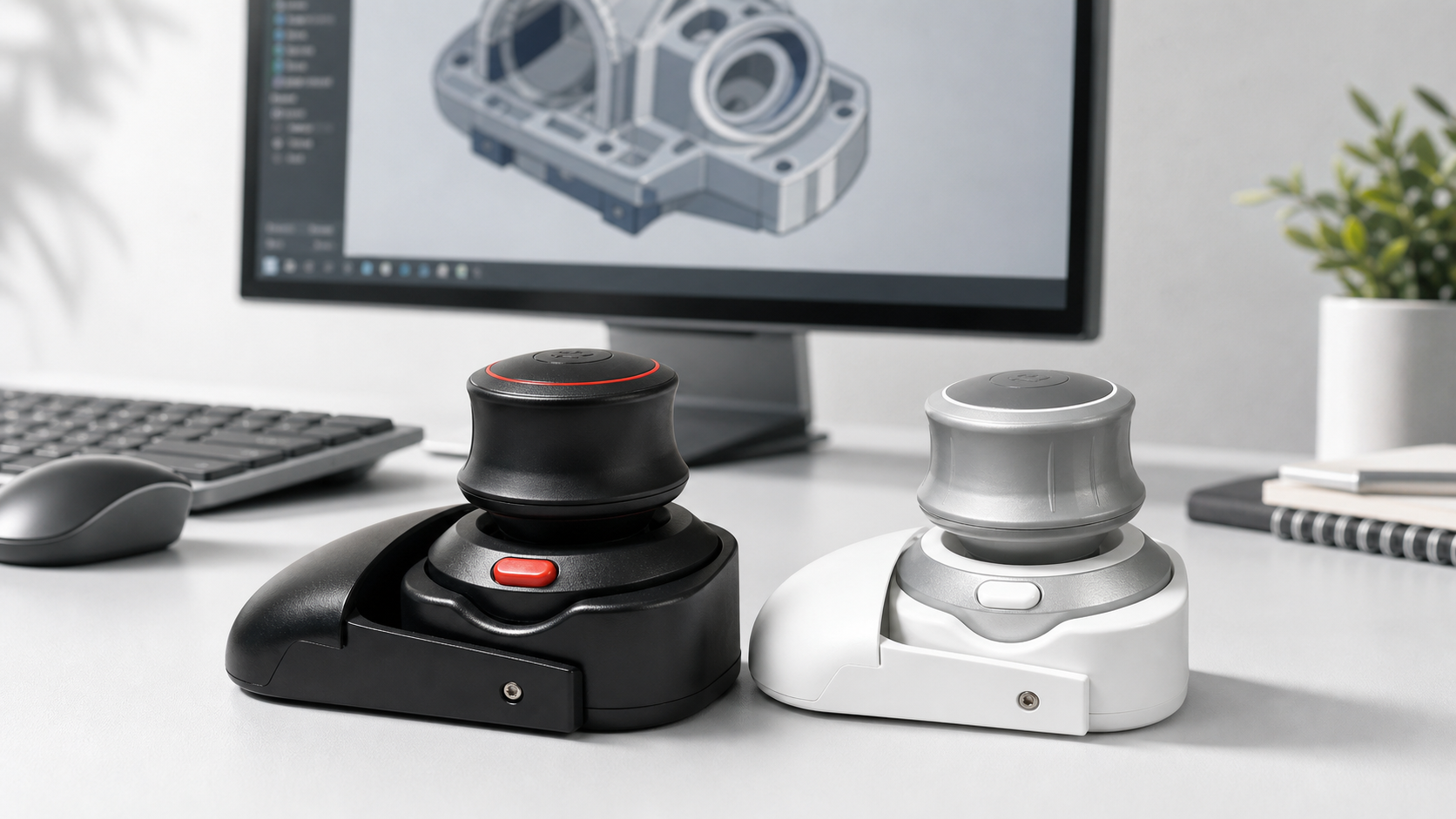
Price-value means asking whether the $129 cost fits the improvement. The Wireless 3D CAD Mouse is the purchase and evaluation target here, so judge it as a compact Bluetooth navigation controller rather than a magic productivity device.
Before and after observations
Write down what felt slow before testing: assembly review, Blender scene layout, Google Earth presentation, 3D printing checks, or CAD part inspection. After testing, write down whether those tasks improved. Specific notes are more useful than a vague feeling.
For a broader buying frame, compare your findings with the 3D CAD mouse product page checklist.
Your review should include at least one “before” task and one “after” task. For example, inspect the same assembly with your normal mouse, then repeat with the controller. Time is not the only measure. Notice fatigue, clarity, comfort, and whether you felt more in control during the review.
If you cannot name the improved task after testing, the review result is still useful: the product may work technically but not matter enough for your workflow.
Good notes can be short. Write “assembly review easier,” “too fast in Blender,” “pairs well after sleep,” or “not useful for my 2D work.” Those observations are more valuable than a star rating without context.
FAQ
How long should I test it?
Use several real sessions during the return window. One short test is not enough.
What software should I test first?
Test the software you use most often for real CAD, modeling, scene, or map work.
What makes a review fair?
A fair review compares actual before and after workflow friction, not only first-day excitement.
What if it works but I rarely use it?
Then it may not be worth keeping. Frequency matters in accessory value.
Bottom line
A 3D Mouse Kit review should be practical. Test real work, write down observations, and keep the device only if it improves repeated navigation tasks.