
Blog
Best 3D Mouse Alternatives for CAD Beginners
Jul
The best 3D mouse alternative for a CAD beginner is not always another dedicated controller. The right answer depends on budget, desk space, wireless needs, software support, and how often the beginner actually navigates in 3D. Some users need a dedicated spatial controller. Others need better shortcuts, a normal mouse, or more practice first.
Think of “alternative” as a workflow choice, not only a product category. A good beginner setup should reduce friction without creating a confusing desk full of hardware.
Alternative categories to consider
The first category is a dedicated 3D controller. This makes sense when orbit, pan, zoom, and model review happen frequently. The second category is a shortcut-heavy workflow with a normal mouse and keyboard. This costs nothing and may be enough for simple projects. The third category is a better regular mouse with comfortable buttons and reliable precision.
A beginner should choose based on the bottleneck. If selection is hard, a 3D controller will not solve it. If view movement is the issue, dedicated navigation becomes more relevant.
Price, wireless needs, and workflow fit
Price matters because beginners may not know yet which CAD habits will stick. Wireless matters if the desk is small, the computer is a laptop, or the user moves between workspaces. Workflow fit matters most of all: a controller used twice a month is not a strong purchase.
Before buying, compare your habits with a wireless 3D mouse buying guide. The goal is to match the device to real navigation needs.
Premium ecosystems deserve a fair note
Premium brands can offer deeper software ecosystems, button mapping, driver maturity, and established CAD workflows. Some professional users should choose that route, especially if they need advanced integration, team standardization, or very specific software support.
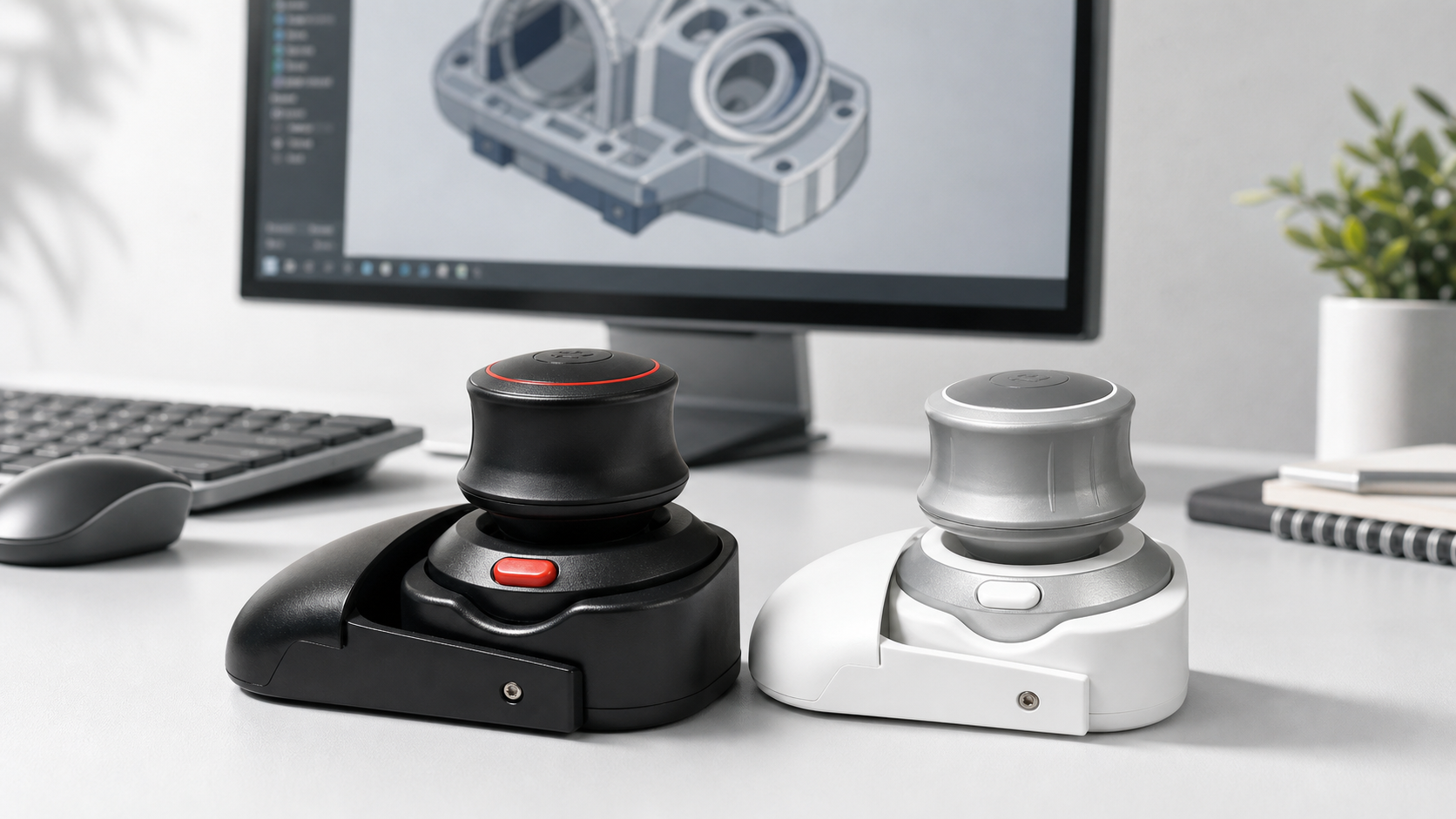
At the same time, beginners who mainly need core 3D navigation may not need to start at the highest price point. The Wireless 3D CAD Mouse is one affordable Bluetooth option for users who want to test dedicated navigation at $129 without pretending it is the same as every premium ecosystem.
How to decide
Use a simple test. Spend a week noting every time CAD navigation interrupts you. If the problem happens daily, a 3D mouse alternative is worth comparing. If the problem happens rarely, improve shortcuts and basic navigation first.
This also protects your budget. Beginners often buy hardware before they can name the workflow problem. A short note-taking test gives the purchase a practical reason.
FAQ
Is a normal mouse a real alternative?
Yes. For simple CAD work, a comfortable regular mouse plus shortcuts may be enough.
Who should buy a dedicated controller?
Users who frequently inspect 3D models, assemblies, scenes, or design revisions have the strongest case.
Are premium ecosystems always better?
They may be better for advanced integration, but not every beginner needs that level on day one.
What is the safest beginner approach?
Start by identifying the real bottleneck: selection, shortcuts, desk comfort, or 3D navigation.
Bottom line
The best 3D mouse alternative is the one that matches the beginner’s actual workflow. Do not overbuy before you know whether navigation is truly the problem.