
Blog
3D Mouse vs Gaming Mouse for 3D Modeling
Jul
A 3D mouse and a gaming mouse solve different problems. A gaming mouse is built around pointer precision, buttons, polling behavior, and fast hand movement. A 3D mouse is built around spatial navigation: orbit, pan, zoom, tilt, and model review. For 3D modeling, the best setup may use both.
The mistake is treating one as a replacement for the other. A gaming mouse can be excellent for selection, brush work, menus, and shortcuts. A 3D mouse can make viewport movement smoother when the model or scene needs constant inspection.
Pointer precision versus viewport control
Pointer precision matters when selecting vertices, edges, faces, controls, icons, and menu items. A gaming mouse can feel responsive and familiar for these tasks. It can also offer extra buttons for common commands if the software supports them.
Viewport control is different. When you constantly rotate around a product, inspect a Blender scene, check a CAD assembly, or present a model, the navigation hand can handle movement while the main mouse stays ready for selection.
Where gaming mouse buttons still help
Gaming mouse buttons can still be useful for shortcuts such as view reset, tool switching, undo, or app-specific commands. They are not wasted just because a 3D mouse exists. The regular mouse remains central to modeling work.
The difference is role separation. A 3D mouse handles spatial movement; the gaming mouse handles cursor work. This is similar to the two-handed CAD workflow used by many model reviewers.
Ergonomics and workflow roles
Ergonomics depends on hand comfort and repetition. If your right hand does all selection and navigation, fatigue can build. A 3D mouse may distribute some movement to the other hand. A gaming mouse may still offer better comfort for pointing and clicking.
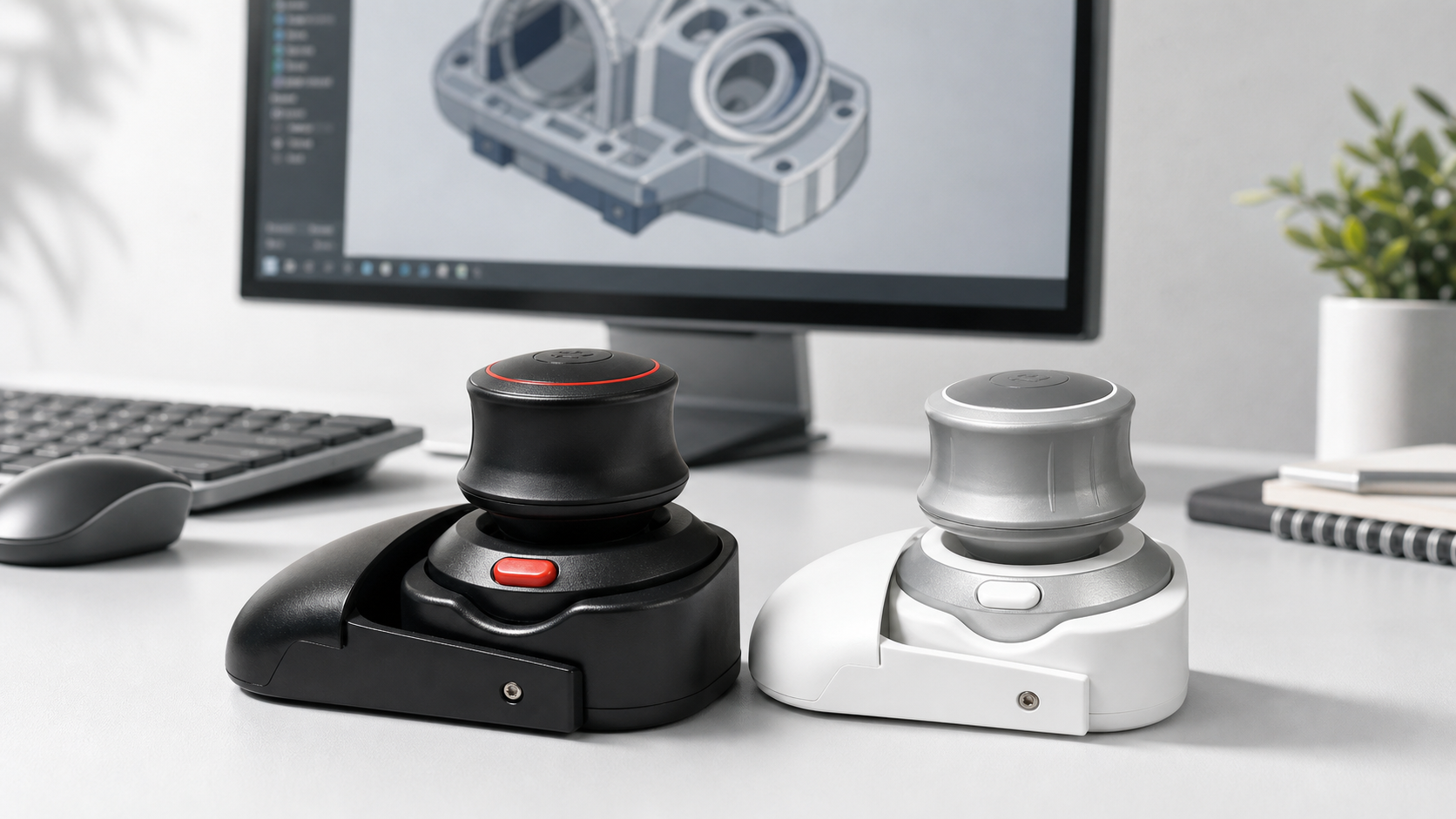
The Wireless 3D CAD Mouse should be viewed as complementary to a normal or gaming mouse. It is a Bluetooth 3D CAD mouse controller for navigation, not a substitute for cursor precision.
A practical setup might put the gaming mouse on the dominant side for selection and shortcuts, with the 3D mouse on the other side for navigation. Test that arrangement in a real scene for at least one session. If your hands keep fighting each other, simplify the setup before buying more hardware.
FAQ
Can a gaming mouse replace a 3D mouse?
It can handle many shortcuts and pointer tasks, but it does not provide the same dedicated spatial navigation.
Can a 3D mouse replace a gaming mouse?
No. You still need a normal pointing device for selection, menus, editing, and general computer use.
Who should use both?
Users who model or review 3D work often and also value precise cursor control may benefit from both.
What should beginners buy first?
Start with a comfortable normal mouse and basic shortcuts, then add dedicated navigation if viewport movement becomes a repeated problem.
Bottom line
A 3D mouse versus gaming mouse comparison is really about roles. Use a gaming mouse for pointer precision and a 3D mouse for spatial navigation when the workflow justifies it.