
Blog
How to Choose a 3D Mouse for CAD, Blender, and Google Earth
Jul
Choosing a 3D mouse gets harder when you want one device for CAD, Blender, and Google Earth. Those workflows all involve 3D navigation, but they do not ask for the same thing. CAD rewards precision and inspection. Blender rewards creative viewport control. Google Earth rewards smooth flying and presentation flow.
The right choice should respect all three uses without letting one dominate the decision. A device that feels good for map exploration may not be precise enough for small CAD parts. A device that is perfect for one workstation may be awkward for a laptop classroom setup.
Precision CAD needs
CAD users should care about controlled orbit, pan, zoom, and model inspection. Small parts, assemblies, drawings, and mechanical checks need movement that can slow down. If the controller is too fast or hard to center, precision CAD work becomes frustrating.
CAD also needs compatibility with the software you actually use. Fusion 360, SolidWorks, Inventor, Rhino, FreeCAD, and browser CAD tools may behave differently, so the test should happen in your real workflow.
Creative modeling and map navigation
Blender and creative modeling often involve scene layout, form review, camera planning, and asset inspection. The controller should feel smooth enough to support creative flow without replacing the regular mouse, keyboard, tablet, or shortcuts.
Google Earth is different again. It is about flying, tilting, zooming, and guiding viewers through places. The movement should be readable and comfortable, as covered in using a 3D mouse with Google Earth.
A simple scoring checklist
Give each use case a score from 1 to 5: CAD precision, Blender comfort, Google Earth smoothness, software compatibility, desk fit, wireless convenience, and return policy. If one category matters twice as much as the others, weight it honestly.
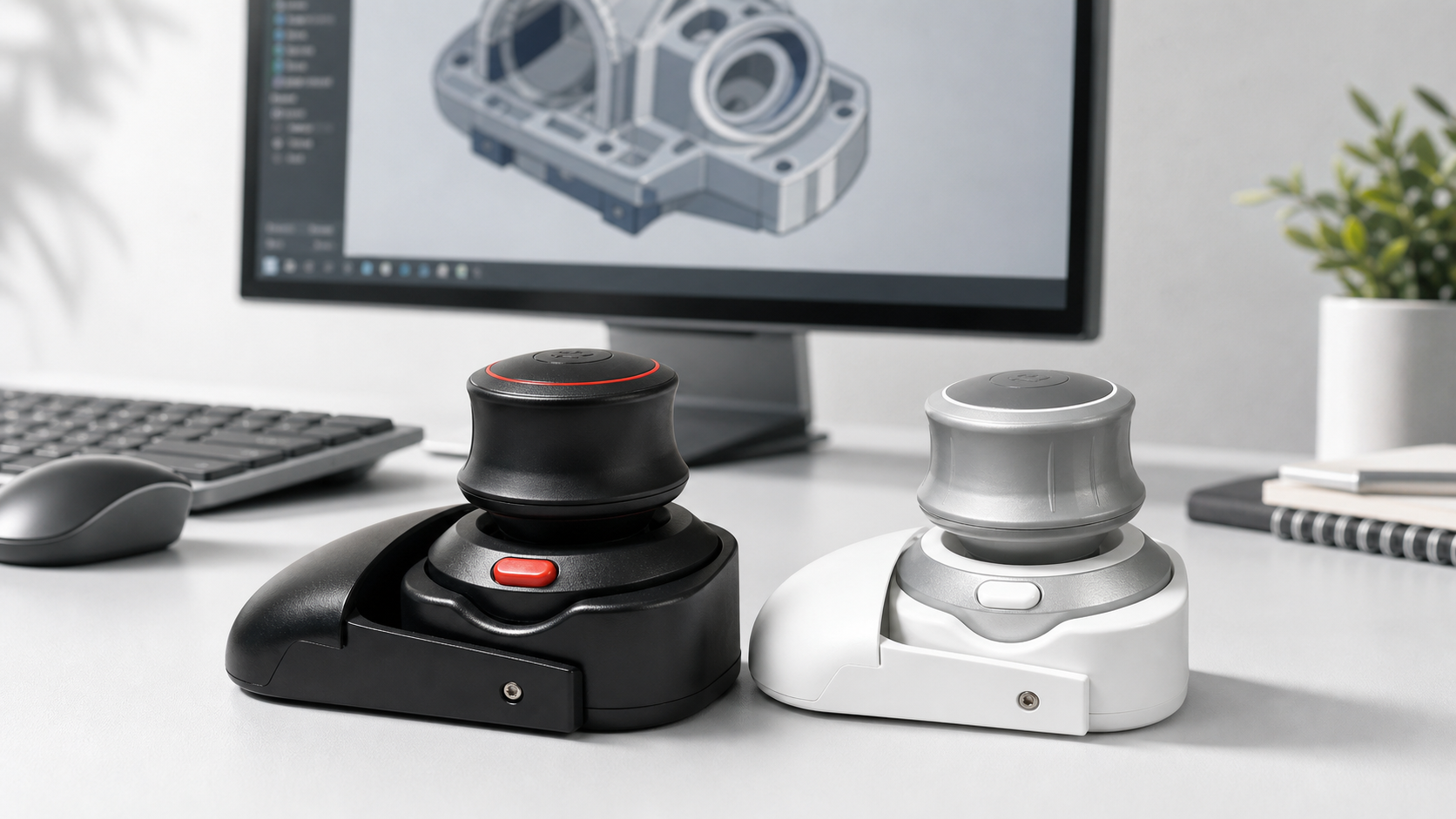
The Wireless 3D CAD Mouse is worth considering for multi-use buyers because its public positioning covers CAD, 3D modeling, Blender workflows, VR scene navigation, and Google Earth style movement. That broad fit still needs local testing on your computer.
A useful multi-use test takes about one hour. Spend twenty minutes in your main CAD tool, twenty minutes in Blender or another modeling app, and twenty minutes in Google Earth or a scene navigation workflow. If the device only feels good in one of those three, buy for that primary use rather than pretending it solves every workflow equally. Real evidence beats wishful thinking.
FAQ
Can one 3D mouse work across all three workflows?
It can, if the device behaves well in each app and your expectations are realistic.
Which workflow should matter most?
The one you use most often for real work should carry the most weight in the decision.
What should multi-use buyers test?
Test one real CAD model, one Blender scene, and one Google Earth navigation session.
Is wireless important?
Wireless helps if you move between desks, classrooms, laptops, or presentation setups.
Bottom line
Choose a 3D mouse by scoring your actual workflows. CAD, Blender, and Google Earth can share one device, but only if each use case passes a real test.